 Nathan Field
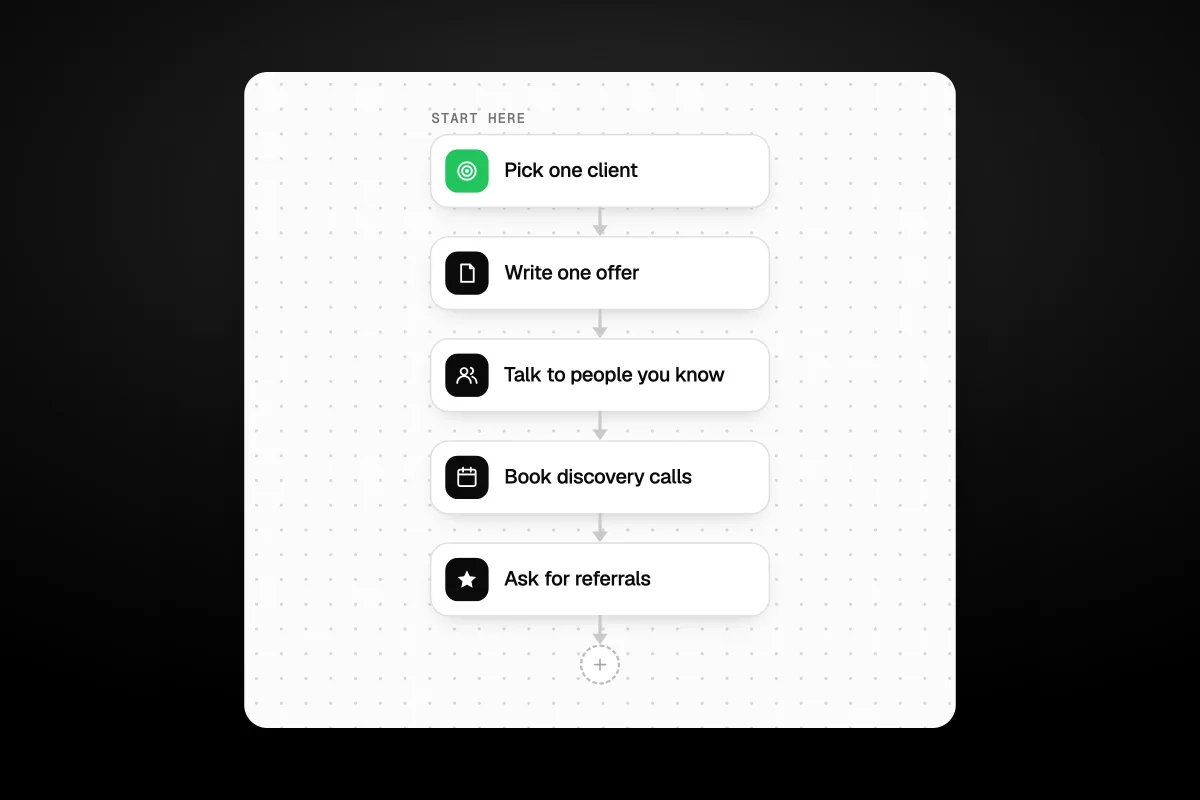
To get coaching clients, start with people, not platforms: pick one kind of client, write one clear offer, then talk to people you already know and book discovery calls. Ask your first clients for referrals. Content, lead magnets, webinars and ads come after that, once you know what people buy and why.
This post is for coaches who can already coach but have an empty calendar. Most advice on how to get coaching clients gives you a long list of ways in no order. Here is the order we would do them in, and what to skip until later.
The short answer
- Pick one client and one problem you solve for them.
- Write one offer in a single sentence, with a price.
- Talk to people you know. Ask for advice and introductions, not a sale.
- Book discovery calls and end each one with a clear yes or no.
- Ask for referrals and testimonials from your first clients.
- Pick one channel for content, and post what clients ask you.
- Add a lead magnet and an email list.
- Then run webinars or ads, once the steps above work.
What should you do first to get coaching clients?
Get clear on who you help before you do any marketing. Every later step depends on it. Here is the full order, and why each step sits where it does.
| Step | What you do | Why it comes here |
|---|---|---|
| 1 | Pick one client | Every message after this is written for them |
| 2 | Write one offer | People cannot say yes to something vague |
| 3 | Talk to people you know | The fastest way to real conversations |
| 4 | Book discovery calls | This is where people actually buy |
| 5 | Ask for referrals | Happy clients bring people like them |
| 6 | Pick one channel | Content works once you know what to say |
| 7 | Add a lead magnet | Catches people who are not ready yet |
| 8 | Webinars or ads | Only scale what already works |
Ads and content make a working offer louder. They cannot make a vague offer clear.
How do you get your first coaching clients?
You get them through conversations, one at a time. Steps 1 to 5 need no website, no ads and no big following.
Step 1: Pick one client
Choose one kind of person and one problem. Not "anyone who wants to grow." Something like "new managers who just got their first team" or "women going back to work after a career break." The more exact, the easier every next step gets.
This feels scary, because it seems to shut people out. It does the opposite. When someone reads your offer and thinks "that is me," they reply. When it could be anyone, nobody feels it is for them.
How to pick: look at the people you have already helped, paid or not. Who got the clearest result? Who did you most enjoy working with? Start there. You can widen it later.
Step 2: Write one offer
Write your offer in one sentence: who it is for, what changes for them, how you do it, how long it takes, and what it costs. For example: "I help new managers run calm, useful team meetings, in eight weekly calls, for a set fee." That is an example shape, not a price tip.
One offer, not a menu. A list of packages makes people stop and think, and thinking often ends in "maybe later."
When we build a funnel for a coach, the first thing we ask for is this sentence. If a coach cannot say it, no page, ad or email will fix that. Once they can, the rest gets much easier to build.
Step 3: Talk to people you know
This is the step most coaches skip, because it feels awkward. It is also the fastest way to your first real conversations.
- Write a list of 50 names. Past coworkers, friends, people from groups you belong to, past clients.
- Message a few each day. A short, personal note. Say what you are doing now, in your one sentence.
- Ask for advice, not a sale. "Who do you know who is dealing with this right now?" is easier to answer than "Do you want to buy coaching?"
- Offer a free 20-minute call to anyone who fits, or anyone they introduce.
- Follow up once if they do not reply. People are busy, not rude.
Some of these people will become clients. More of them will introduce you to someone who does. Both count.
Step 4: Book discovery calls
A discovery call is a short call to see if you can help someone, and if they want to work with you. This is where coaching is actually sold. Most of your early effort should point here.
- Make it about them. Ask what is going on, what they have tried and what they want to change.
- Explain your offer simply if it fits. If it does not fit, say so, and point them somewhere better.
- Say the price on the call. Do not hide it in a follow-up email.
- End with a clear next step: a yes, a no, or a set date to decide.
- Follow up on every "let me think about it." Many people want to say yes and just need a nudge.
If you already get calls but few turn into clients, the problem is often the call or the page before it. We wrote about why most discovery call funnels fail.
Nobody buys coaching from a post. They buy it after a conversation.
Step 5: Ask for referrals
Your first happy clients are your best marketing. They know people with the same problem, because people like them spend time together.
When to ask: right after a client gets a clear win, not at the very end. Ask two things. "Would you write a few lines about what changed for you?" and "Who else do you know who is dealing with this?"
Keep testimonials honest. Use the client's own words, with their okay. Do not promise new clients the same result.
How do you get coaching clients once you have a few?
You turn what you learned on those calls into marketing that works while you sleep. Now you know what people ask, what words they use, and why they say yes. That makes content and pages far easier to write.
Step 6: Pick one channel
Pick one place where your clients already spend time. LinkedIn for managers. Instagram or a podcast for some lifestyle niches. An online community for others. One channel, done well, beats five done badly.
What to post: the questions people asked you on discovery calls, answered plainly. Short stories about problems clients solved, with their okay. One clear way to book a call at the end of each post.
Step 7: Add a lead magnet
Most people who find you are not ready to buy today. A lead magnet is a free, useful thing, like a checklist, a short guide or a quiz, that people get in exchange for their email. Then you stay in touch by email until they are ready.
Make it solve one small part of the problem your offer solves. Here is how to create a lead magnet that converts.
Step 8: Then run webinars or ads
Only now does it make sense to pay for attention or run bigger events. You know your offer sells, you know your call works, and you have a page and an email list to catch people.
A webinar suits coaches who sell higher-priced programs. It lets people see how you think before a call. Here is how a webinar funnel brings in qualified leads. Paid ads work best when they send people to that webinar or to your lead magnet, not straight to "book a call" with a stranger.
Can you get coaching clients without social media?
Yes. Steps 1 to 5 need no social media at all. You can fill a small practice with your network, discovery calls and referrals.
Other ways that do not need a following:
- Speak to groups your clients belong to: a local business group, a professional association, an online community.
- Partner with people who serve the same clients but do not do what you do. A career coach and a resume writer, for example.
- Guest on podcasts your clients listen to.
- Write for newsletters your clients already read.
Should you coach for free to get clients?
Only in a small, planned way. Free work can get you practice and testimonials. It can also fill your week with people who never planned to pay.
If you do it, set limits. A fixed number of sessions. A clear goal. An agreement that they will give honest feedback and a testimonial if it helps. And a plain offer at the end for those who want to keep going.
A free 20-minute discovery call is different. That is not free coaching. It is a sales conversation, and it is worth offering to anyone who fits.
What should you skip when you are starting out?
- A perfect website. One simple page with your offer and a booking link is enough to start.
- A logo and brand colors. They can wait until you have clients.
- Posting on every platform. Pick one, or none, until steps 1 to 5 work.
- Paid ads to a cold audience. You will pay to learn what a few conversations would teach you for free.
- More courses and certificates as a way to put off talking to people.
If you are not sure what to do today, send three messages from your list of 50.
How do you know if it is working?
Count three numbers every week: conversations started, discovery calls held, and new clients. Write them down. You do not need software for this.
- Few conversations? Send more messages, and check your one sentence is clear.
- Conversations, but few calls? Make the call easier to book, and ask for it plainly.
- Calls, but few clients? Work on the call itself, your offer, and your follow-up.
We cannot promise how many calls it takes to land a client. It depends on your offer, your price and who you talk to. The weekly numbers will tell you where your own bottleneck is.
When should a coach get help with marketing?
Once your offer sells and you have more leads than time. Before that, nobody can market a coach better than the coach can by talking to people. Your own phone and a list of 50 names beat any agency at the start, including us.
When you are ready to grow past referrals, that is the work we do for coaches: landing pages, lead magnets, webinar funnels, email follow-up, ads and booking, built and run for you. Havstock Unlimited is a flat-fee marketing subscription at $4,995 USD a month. That only makes sense once coaching already pays your bills. If you are still finding your first clients, follow steps 1 to 5 first.
FAQ
How do I get my first coaching client?
Start with people you already know. Pick one kind of client, write your offer in one sentence, and message people from a list of 50 names. Ask for advice and introductions, not a sale. Offer a short discovery call to anyone who fits. That is the shortest path to a first client.
How long does it take to get coaching clients?
There is no honest fixed answer. It depends on how clear your offer is, who you talk to, and how many conversations you start each week. In our view, daily messages and booked calls move faster than posting content alone. Track your weekly numbers to see your own pace.
Where do coaches find clients?
Early on, in their own network, through introductions, and from groups their clients already belong to. Later, from one content channel, a lead magnet and email list, webinars and paid ads. Referrals from happy clients matter at every stage. Start with the people closest to you and widen out from there.
Do I need a niche to get coaching clients?
It helps a lot. When your offer names one kind of person and one problem, the right people recognize themselves and reply. A broad offer like "helping people grow" is hard to remember and hard to refer. You can start narrow and widen later, once you know who buys from you.
Do I need a website to get coaching clients?
Not at first. Your first clients will likely come from conversations and introductions. One simple page with your offer, a bit about you and a booking link is enough to start. Build a fuller website, lead magnet and funnel once you know what people buy and which words they use.
Should I offer free coaching sessions?
A free 20-minute discovery call, yes. Free coaching, only in a small, planned way, with a set number of sessions, a clear goal and an agreement to give honest feedback. Unplanned free work fills your week with people who were never going to pay. Make a plain paid offer at the end.
That is how to get coaching clients in order: one client, one offer, real conversations, discovery calls, then referrals. Only after that, content, lead magnets, webinars and ads. Do the first five steps well and the rest has something to build on.