
Your customers don't magically appear at checkout.
They go through a series of experiences before deciding whether to trust and buy from your business.
They see content.
They visit your website.
They compare options.
They ask questions.
They receive emails.
They book a call.
They purchase.
Understanding that journey can reveal opportunities to improve your marketing.
What Is a Customer Journey Map?
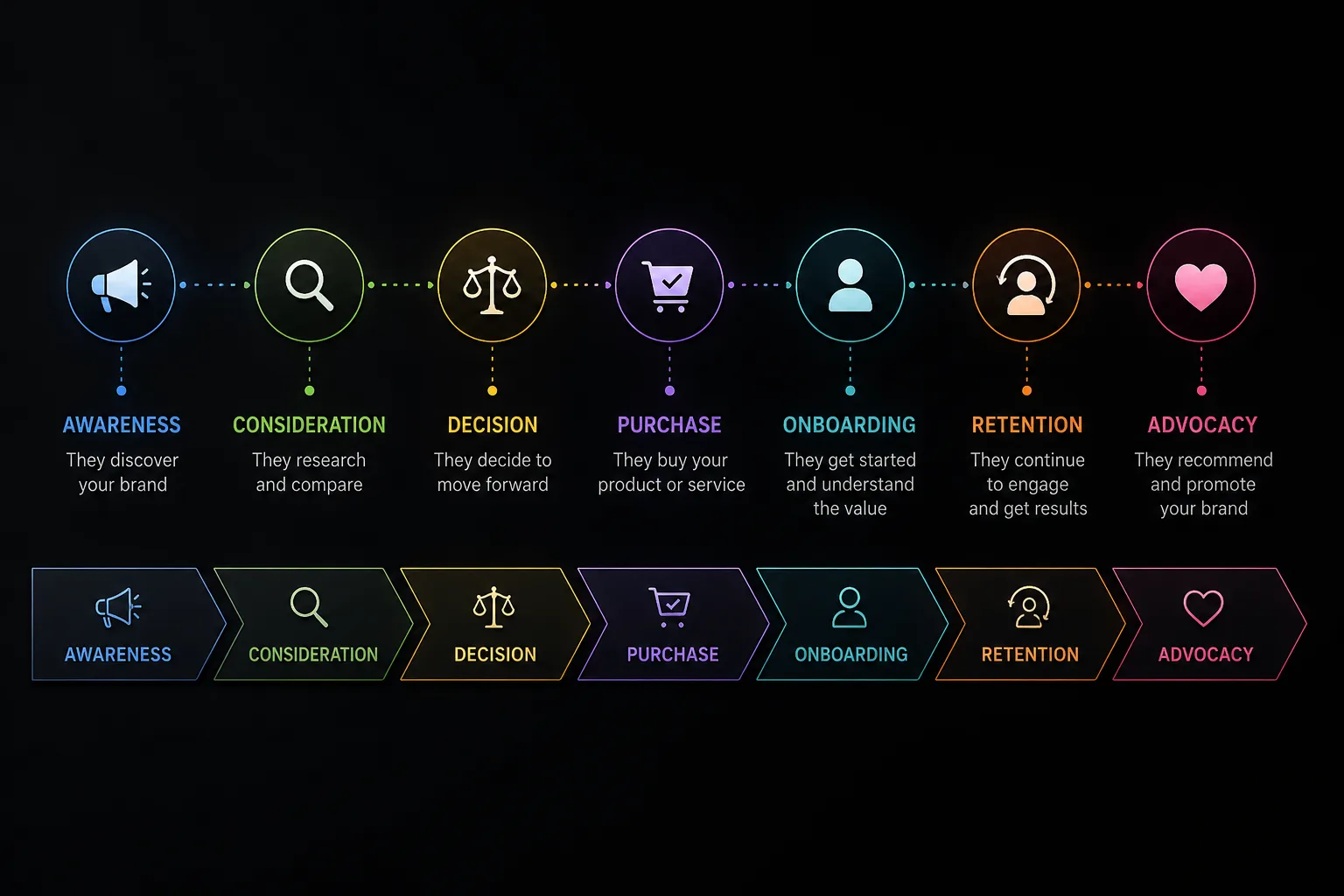
A customer journey map visually represents the steps someone takes when interacting with your business.
A simple journey might look like:
Identify Your Customer
Start with your ideal customer.
Document:
Goals
Problems
Questions
Concerns
Buying motivations
Preferred communication channels
You need to understand the person moving through the journey.
Map Every Touchpoint
List where customers interact with your business.
This could include:
Google search
Social media
Website
Blog
Email
Sales calls
Reviews
Checkout
Customer support
Each interaction influences the overall experience.
Identify Friction
Look for points where customers may hesitate.
Examples include:
Confusing website messaging
Complicated forms
Slow responses
Unclear pricing
Too many steps
Lack of trust signals
Removing friction can improve conversion.
Connect Marketing and Sales
Your customer journey shouldn't stop when someone becomes a lead.
Marketing can attract and nurture prospects.
Sales can qualify and convert them.
Operations can onboard them.
Customer success can retain them.
The entire business contributes to the journey.
Automate Where Appropriate
Once the journey is mapped, identify repetitive interactions.
These may include:
Welcome emails
Appointment reminders
Follow-ups
Review requests
Re-engagement campaigns
Renewal reminders
Automation can make the journey more consistent.
A customer journey map helps you see your business from the customer's perspective.
Instead of asking, "What do we want customers to do?"
You start asking:
"What does the customer need at this stage?"
That shift can improve the entire experience.
Frequently Asked Questions
Why create a customer journey map?
It helps businesses understand customer interactions and identify friction, communication gaps, and opportunities for improvement.
How many stages should a journey have?
There is no fixed number. Keep the map detailed enough to understand important customer interactions without making it unnecessarily complicated.
Can automation improve the customer journey?
Yes. Automation can make communication more timely and consistent across multiple stages.
Build Better Customer Experiences with Havstock
Havstock helps businesses connect customer journeys with CRM, automation, funnels, and marketing systems.