
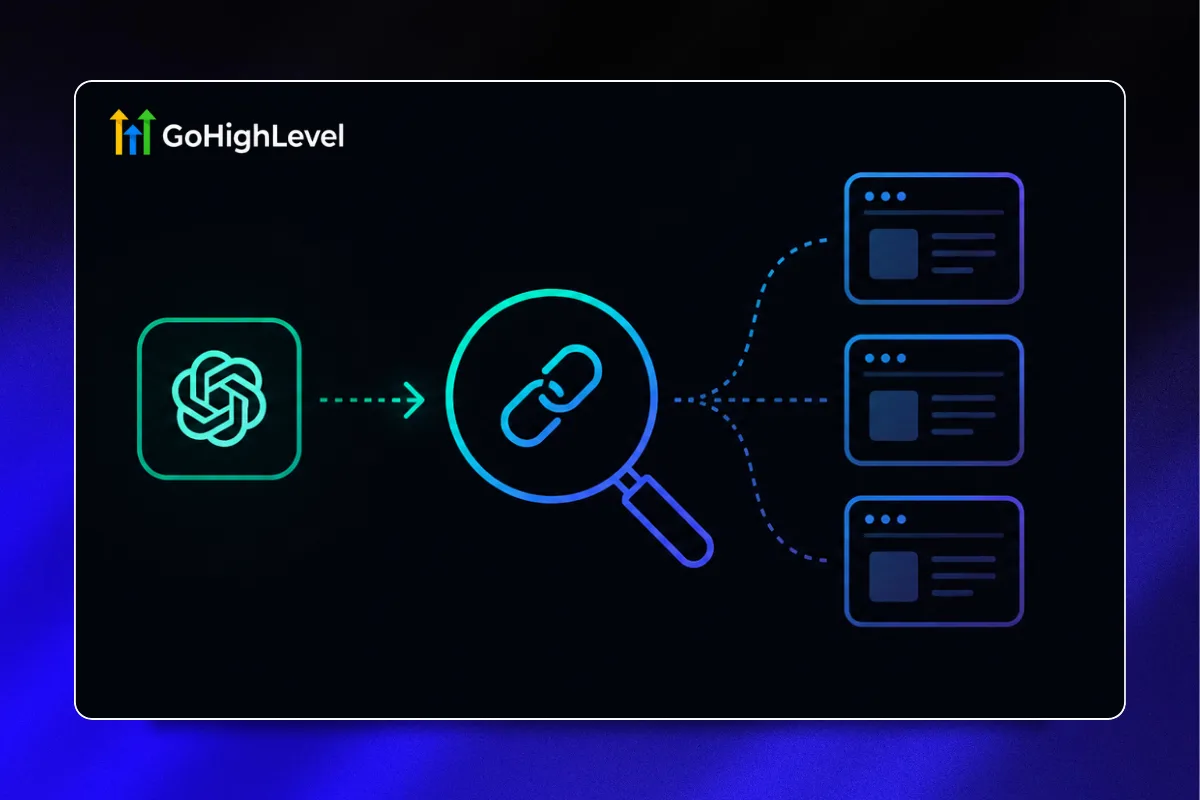
Link building used to mean spreadsheets, hours of manual Ahrefs digging, and a cold outreach queue that felt like shouting into the void. Most people spend an entire week identifying competitor backlink opportunities, then another week firing off emails that get ignored. The conversion rate on cold outreach is brutal, and the time cost is even worse.
There is a faster, smarter way to do this now. ChatGPT's agent mode can run the entire competitor backlink research process in minutes, surfacing more opportunities than most SEOs find in a month, and many of those opportunities require zero outreach to capture.
This guide walks you through exactly how to use it, what to do with the results, and why the underlying strategy beats the traditional approach every time.
What ChatGPT Agent Mode Actually Does for Backlink Research
Most people know ChatGPT as a text tool. Agent mode is a different beast entirely. When you enable it at chat.com, ChatGPT gains the ability to operate a virtual desktop, browse the web in real time, navigate tools like Ahrefs or Semrush, and compile what it finds into a structured output.
For backlink research, this means the agent can literally open your competitors' backlink profiles, scroll through them, categorise link types, and identify patterns that would take a human analyst hours to spot. It is not summarising information it already has. It is actively browsing and extracting live data.
The result is a research output that rivals what you would get from a dedicated SEO analyst, delivered in a fraction of the time. And because it is prompted to think strategically, it does not just dump raw links. It explains why each backlink was earned and how you can replicate it without cold outreach.
“The best backlink strategy in 2026 is not outreach volume. It is intelligence about what is already working for your competitors.”
This is a capability shift. SEOs who are still building link prospect lists manually are playing a slower, harder game than they need to be.
The Exact Prompt to Use
Open chat.com, click the plus icon to start a new session, and enable agent mode. Then paste this prompt, customised for your domain:
“"You are a link building analyst. Identify my top 5 SEO competitors for [your niche/domain]. Analyze their backlink profiles. Find a list of blogs, resource pages, guest posts, and mentions without links. For each backlink type, explain why they got it and how I can replicate it without outreach. Output a prioritised list."”
The agent will open a virtual browser, navigate to backlink analysis tools, research your competitors one by one, and return a structured, prioritised list of opportunities. Depending on how competitive your niche is, the output can run to dozens of categories and hundreds of individual opportunities.
You do not need to feed it data manually. It finds everything on its own.
“One prompt. Minutes of runtime. The kind of backlink intelligence that used to cost hours or an agency retainer.”
What the Agent Finds
The output from this prompt is not a simple list of domains. The agent categorises opportunities by type and explains the logic behind each one. Here is what consistently comes back.
Blogs and Resource Pages
The agent identifies blogs in your niche that have already linked to your competitors, and resource pages that aggregate tools, guides, or references relevant to your space. These are some of the highest-value backlinks available because they are already contextually relevant and the page owner has demonstrated a willingness to link out.
The replication strategy here is content quality. If your competitor earned a link from a resource page by publishing a comprehensive guide, you publish a better, more current version. The page owner has a reason to swap the link without you needing to beg for it. Ahrefs calls this the Skyscraper Technique, and it remains one of the most reliable link building methods in the industry.
Guest Post Opportunities
The agent flags publications where your competitors have written guest posts. These are often not publicly listed anywhere, but a trained agent scanning backlink profiles can spot the pattern: a link from a specific publication to multiple competitors usually means that publication accepts contributions.
Pitching guest posts is technically a form of outreach, but it is warm outreach with a clear angle. You are not cold-asking for a link. You are pitching editorial value to a publication that has already signalled interest in your topic.
Unlinked Mentions
This is one of the most overlooked opportunities in link building. An unlinked mention is when a website references your brand, product, or content without actually hyperlinking to you. The agent scans for these across competitor profiles and your own.
Converting an unlinked mention into a link is the lowest-friction backlink you can earn. The site already knows you exist and found you worth referencing. A single, polite note pointing out the omission has an extremely high conversion rate. According to Backlinko, unlinked mention campaigns consistently outperform cold outreach in response rate and link quality.
Recurring Content Series and Frameworks
One of the more creative outputs the agent produces is identifying competitors who have earned sustained backlink growth by coining a proprietary framework or running a recurring content series. This could be a named methodology, an annual study, a weekly roundup, or a signature data report.
These assets earn links organically over time because they become reference points in the industry. The agent identifies what your competitors are doing, which tells you exactly what format is working in your niche, and then you build your own version. No outreach required. The link accrual happens as people discover and cite the content naturally.
For example, if you use GoHighLevel to run your funnels and client operations, a monthly data report on conversion rates for high-ticket offers in your niche could become a recurring cite-worthy asset that earns links month after month.
Niche Slack Groups and Communities
This one surprises people. The agent often identifies community channels, Slack groups, and private forums where your competitors' content is being shared and picked up by bloggers and writers looking for references. The connection is simple: content shared actively in tight-knit communities gets read by the exact people who write content and link to sources.
This is not about spamming groups with your links. It is about becoming genuinely present in the communities where your potential linking partners already hang out. When you share useful content in a niche Slack group, that content gets bookmarked, referenced, and linked to by the members who are actively publishing in your space.
The Smarter SEO Philosophy Behind This Method
Most link building advice focuses on domain authority and volume. Get as many links as possible from as many high-DA sites as possible. That approach produces vanity metrics more than it produces revenue.
The philosophy driving this method is different. The goal is not to chase backlinks for the sake of them. The goal is to build links to the pages that matter for conversion: your landing pages, your offer pages, your service pages, the content that warm leads and paying customers actually land on before they decide to buy.
Generic blog posts earning links from generic blogs does not move revenue. A backlink to your Lead Magnet OS page from a resource article about lead generation strategies does. A link to your core offer page from a niche community roundup does.
When you use ChatGPT agent mode to reverse-engineer competitor backlinks, you are not just finding link opportunities. You are finding the exact distribution channels your market uses to discover and evaluate services like yours. That intelligence is worth more than any link count metric.
“Backlinks that point to conversion pages are worth ten times the same link pointed at a random blog post. Build for revenue, not for reports.”
In 2026, the SEOs winning at link building are the ones building link programmes around brand depth, topical authority, and genuine community presence. They are not cold-emailing 500 prospects and hoping for a 2% response rate. They are engineering linkability into the content and the brand, and then using tools like ChatGPT agent mode to surface the shortest path to every opportunity.
FAQ
What is ChatGPT agent mode?
ChatGPT agent mode is a feature available at chat.com that allows ChatGPT to operate a virtual desktop environment, browse the web in real time, interact with websites and tools, and complete multi-step tasks autonomously. Unlike standard ChatGPT, agent mode does not rely solely on training data. It actively browses and extracts live information.
Can ChatGPT agent mode actually analyse competitor backlinks?
Yes. When prompted correctly, the agent navigates to backlink analysis tools, researches your specified competitors, and returns categorised output including link types, sources, and replication strategies. The quality of the output depends on the specificity of your prompt and your niche.
Do I need a paid ChatGPT plan to use agent mode?
Yes. Agent mode requires a ChatGPT Plus subscription or higher. As of early 2026, it is not available on the free tier.
What types of opportunities does the agent find?
The agent typically identifies blogs and resource pages linking to competitors, guest post opportunities, unlinked brand and topic mentions, recurring content formats earning sustained links, and community channels where competitor content is being shared and picked up.
Is this better than traditional cold outreach?
For research speed, yes, significantly. The agent compresses hours of manual analysis into minutes. For execution, many of the opportunities it surfaces do not require outreach at all. The ones that do involve warm, targeted contact rather than cold mass email. The overall effort-to-result ratio is better than traditional outreach for most niches.
What are unlinked mentions and why do they matter?
An unlinked mention is when a website references your brand, product, or content without hyperlinking to it. These are valuable because the site has already demonstrated awareness and relevance. Converting them to links requires minimal effort compared to earning a link from a site that does not know you exist.
How often should I run this analysis?
Running a full competitor backlink analysis every one to two months is a reasonable cadence for most businesses. Competitive niches may benefit from monthly reviews. The goal is to catch new linking opportunities before competitors capitalise on them, and to track whether your own link building efforts are producing results relative to the competitive landscape.
Can I use this for any niche?
Yes, though the agent performs best when given a specific domain or clear niche context. The more specific your prompt, the more targeted and actionable the output. Broad prompts produce broad results. Tell the agent exactly what your business does and who your paying customers are for the best prioritisation.
Building a high-ticket offer and want a funnel built to rank and convert? The High Ticket OS is the complete GoHighLevel funnel system for coaches and consultants.