
 Nathan Field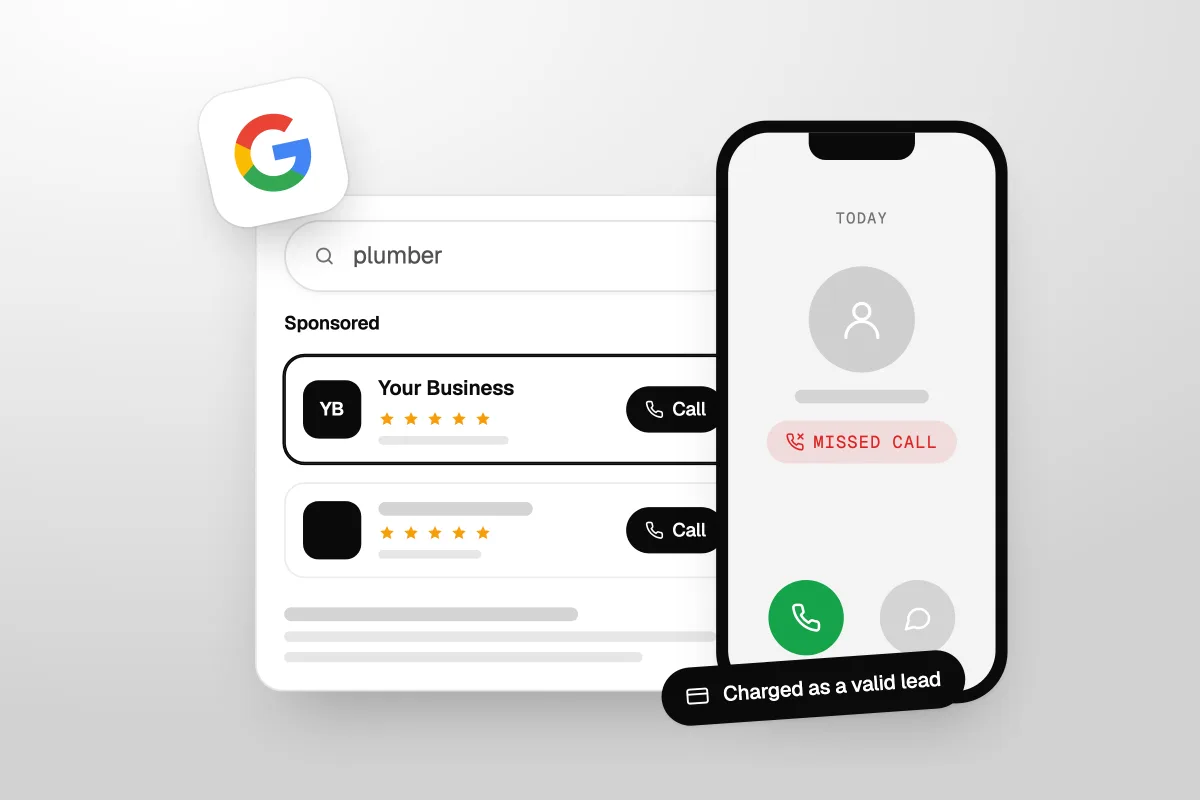
From 1 October 2026, Google Local Services Ads can charge you for missed calls. If someone calls during your business hours and stays on the line for more than 20 seconds, that call can count as a paid lead, even if nobody picks up. Here is what changed, what Google has not explained yet, and what to fix before the 1st.
Search Engine Roundtable reported it on 25 August 2026, the day after Google emailed advertisers. Every fact below links to Google's own help pages or to the reports that quoted Google's notice. Where Google has not said something, we say so.
The short answer
Local Services Ads missed calls become billable on 1 October 2026. A missed call during business hours is charged if the caller waits more than 20 seconds. Some follow-up calls can be charged too. To stop paying for calls nobody answers, list honest business hours, answer inside 20 seconds, pause when you are away, and text back every missed call.
What changes on 1 October
Google's notice to advertisers was headed "Upcoming changes to lead charge policy". It reached inboxes on 24 August 2026, according to PPC Land. It makes two changes.
1. Missed calls can now cost you
From 1 October, a missed call during business hours is charged as a valid lead if the caller stays on the line for more than 20 seconds (Search Engine Roundtable, 25 August 2026).
Compare that with the rule on Google's help page today. It says a missed call with no voicemail becomes a valid lead only when you return it, and then speak to the customer or leave a voicemail (Google, How leads work, checked 27 September 2026). So until now, a missed call you never returned cost you nothing. The help page has not been updated for the new rule yet.
Until now, a missed call you never returned was free. From 1 October, you can pay for it and still lose the job.
2. Follow-up calls can be charged
If a customer's first call does not count as a charged lead, later calls between you and that customer that meet Google's valid lead rules will be charged. On 26 August, Google's Ads Liaison, Ginny Marvin, clarified that you are charged only once for follow-up calls you make to that person within 15 days of the first contact (same Search Engine Roundtable report).
In plain words: a caller who slipped through can still become a paid lead when you talk to them later. You should pay once for your callbacks to them in that 15-day window, not once per call.
The small print
- Phone menus. If callers must press a key to reach the right team, the 20-second timer starts when they press it. If they never press a key, the call is not charged (PPC Land's summary of the notice).
- Spam. Google says it is adding safeguards against robot calls and spam. It has not said how they will work.
- Outside business hours. The missed-call rule covers calls during business hours. But note a separate line on Google's help page: a valid lead received outside your business hours will not be credited. If you answer a 9pm call, expect to pay for it.
- Google's reason. Google said the change is about "rewarding businesses that provide excellent responsiveness" (quoted by Search Engine Roundtable).
What Google has not said yet
PPC Land read the notice closely and found real gaps. On a direct line, it does not say when the 20 seconds start: when the call connects, at the first ring, or at some other point. (Phone menus are the one case it covers.) It does not say how a call that ends in voicemail is treated. And it gives no new way to appeal a missed-call charge.
Until Google fills those gaps, plan for the strict reading. Assume the clock starts when the phone starts ringing. Assume every missed call over 20 seconds in your listed hours will show up on your bill.
Why a missed call now hurts twice
The new charge is the part everyone is talking about. The ranking part is older and gets less attention. Google's page on how Local Services Ads are ranked lists your responsiveness to customer enquiries as a factor, and says "missed calls may negatively affect your responsiveness" (Google, About ad rankings, checked 27 September 2026).
So from 1 October, one unanswered call can cost you the lead fee and push your ad lower next time. And the customer still hires someone else.
How often does this happen? The number you will see quoted everywhere is that 62% of calls to small businesses go unanswered. That comes from a study 411 Locals published in January 2016. 411 Locals is a marketing firm. It which tracked 85 businesses for 30 days: 37.8% of calls were answered, 37.8% went to voicemail and 24.3% got no response. It is old and small, so treat it as a warning sign, not a fact about your business. The only number that matters is your own. The test further down shows you how to get it.
Who this hits hardest
- Owners on the tools. If the person who answers the phone is also under a sink, calls ring out all day.
- One-line offices. When the only person on the phones is already on a call, the next caller waits. Past 20 seconds, that wait can be billed.
- Long listed hours. A profile that says 6am to 10pm, with nobody answering before 8 or after 5, now pays for the gap.
- Trades moving into Google Ads right now. Plumbing, HVAC, electrical, appliance repair, house cleaning, lawn care, roofing, pest control and moving are in the first wave of the move into Google Ads, which started in August 2026 for select US advertisers (Google Ads Help, checked 27 September 2026). They get both changes at once.
What to fix before 1 October
None of this needs new software to start. Most of it is settings and habits.
1. Set your hours to when someone really answers
Your listed business hours now decide which missed calls can be billed. If nobody picks up before 8am, do not list 7am. Be honest about lunch, school runs and the days the owner is on a big job. Shorter hours that you cover beat long hours that you do not.
2. Answer inside 20 seconds
Twenty seconds is shorter than it sounds. Set the office line to ring more than one phone at once, so whoever is free picks up. Then decide what happens when everyone is busy: a teammate, an answering service, or an AI receptionist on overflow. The worst option is a phone that rings out.
3. Pause when nobody can answer
Holidays, sick days, a fully booked week: pause your ads rather than let calls ring. Google's help page says to pause or edit campaigns in the Local Services Ads inbox, not the main Google Ads screen (Google, checked 27 September 2026). If your account has already moved into Google Ads, check where the pause button sits now.
4. Turn on message and booking leads
Google's ranking page says message and booking leads give customers more ways to reach you, "especially during nights and weekends when you can't answer the phone". Its leads page adds that message leads are typically priced lower than phone leads, though not always. Booking leads are only offered in the United States and Canada.
5. Text back every missed call within minutes
From 1 October you may pay for a missed call either way. So the only question left is whether you still win the job. An automatic text that goes out the moment a call is missed ("Sorry we missed you. What do you need help with?") keeps the customer talking to you instead of calling the next ad. We wrote about how to automate lead follow-up without it feeling robotic. If we were setting up a service business from scratch, this is the first automation we would switch on.
6. Think twice before adding a phone menu
A "press 1" menu does start the timer later, and callers who never press a key are not charged. But every extra step loses people who want a person now. For emergency work, where the customer calls down the list until someone answers, we think a menu costs more jobs than it saves in fees.
7. Download your reports and watch the numbers
Google says your Local Services Ads performance reports will not move across to Google Ads. It says a download will be on a redirect page soon, and until then it suggests taking screenshots before you move (Google Ads Help). Screenshot your numbers now. Then check four numbers every week in October: charged leads, missed calls, booked jobs and cost per booked job.
8. Report bad leads
Google reassesses charged leads over time and may credit low-quality ones automatically. You can also flag a poor lead in the Feedback Survey for that lead. Credits are not available for health care, tax specialists or advertisers in Europe, the Middle East and Africa (Google, How leads work). Google has not said whether a missed-call charge can be flagged this way.
A test you can run tonight
Call your own business number during your listed hours, from a phone your team will not recognise. Pick a busy moment. Count the seconds until a person answers.
Then try it at the edges of your hours: the first half hour, lunch, the last half hour. Note what happens when nobody answers. A voicemail? A text? Nothing at all?
That is exactly what your Local Services Ads customers get. If any of those calls rang past 20 seconds, that is where your money will leak from 1 October.
Local Services Ads are also moving into Google Ads
The missed-call change lands in the middle of a bigger move. Here is what Google's help page says (Google Ads Help, checked 27 September 2026):
| What | What Google says |
|---|---|
| When | August 2026 for select US home and storefront service advertisers. Late 2026 for more. 2027 for accounts outside the US and all other categories. |
| Campaign type | A Performance Max campaign built for pay-per-lead goals. |
| Bidding | Manual bidding is going away. |
| Budget | Your average weekly budget is divided by 7 to set a daily budget. |
| Reports | Local Services Ads reports do not move across. A download is coming; take screenshots first. |
| What you pay for | Still valid leads only, such as calls and messages. |
PPC Land made a fair point: any month-on-month comparison across 1 October mixes two meanings of "lead". With manual bid caps and old reports going too, it will be hard to see what changed. That is one more reason to save your numbers and start counting now.
Our take
We think this change is fair to the customer and tough on owners who treat Local Services Ads as a list to ring back later. A person who calls a plumber at 10am wants a plumber at 10am, not a callback at 4.
If you already answer fast, this may even help you. Rivals who let the phone ring will pay more for the same calls, and Google already ranks responsiveness. If your phone rings out, fix the phone before you raise your budget. More ad spend into a phone nobody answers just buys you bigger bills.
This will not change much for you if your Local Services Ads spend is small, or if someone already answers every call inside a few rings. In that case, save your reports, keep an eye on October's bill, and move on.
If you would rather hand the whole lead system to someone, see how Havstock Unlimited works. It is a flat monthly marketing subscription that covers your Google ads, your CRM, missed-call texts and AI chat on your site that answers questions and books jobs. To be clear, we do not answer your phones. We build everything around them.
FAQ
When does Google start charging for missed Local Services Ads calls?
On 1 October 2026. Google emailed advertisers about it on 24 August 2026, in a notice headed "Upcoming changes to lead charge policy". From that date, a missed call during your business hours can be charged as a valid lead if the caller stays on the line for more than 20 seconds.
What counts as a missed call Google will charge for?
A call during your listed business hours that nobody answers, where the caller stays on the line for more than 20 seconds. Google's notice does not say when the 20 seconds start or how voicemail is treated. Until it does, assume the clock starts at the first ring and plan to answer well inside 20 seconds.
Will I be charged for missed calls outside my business hours?
The new missed-call rule, as reported, covers calls during business hours only. But if you answer a call outside your hours and it is a valid lead, Google's help page says it will not be credited. So set your hours to match when someone can really answer, and expect to pay for any after-hours call you pick up.
Does a "press 1" phone menu stop the charge?
It changes when the timer starts. If callers must press a key to be routed, the 20 seconds start after they press it, and callers who never press a key are not charged. The catch is that menus lose callers who want a person now, which matters most in emergency trades like plumbing and HVAC.
Can I get a credit for a missed-call charge?
Google has not said. Its current help page says charged leads are reassessed and low-quality ones may be credited automatically, and you can flag a poor lead in its Feedback Survey. Credits are not offered for health care, tax specialists or advertisers in Europe, the Middle East and Africa. Nothing yet covers missed calls specifically.
Does missing calls hurt my Local Services Ads ranking?
Yes, according to Google. Its page on ad rankings lists your responsiveness to customer enquiries as a factor and says missed calls may hurt it. So a missed call can cost you twice from 1 October: once as a charged lead, and again as a lower spot in the ads the next time someone searches.
Are Local Services Ads moving into Google Ads?
Yes. Google started moving select US home and storefront service advertisers into Google Ads in August 2026, as a Performance Max pay-per-lead campaign. More follow in late 2026, and other countries in 2027. Manual bidding goes away, and your old Local Services Ads reports do not move across, so screenshot them before you move.
Local Services Ads missed calls start costing money on 1 October. The fix is not clever. Answer every call inside 20 seconds, list only the hours you can cover, and text back anyone you miss. Run the test above tonight and you will know where you stand.