 Nathan Field
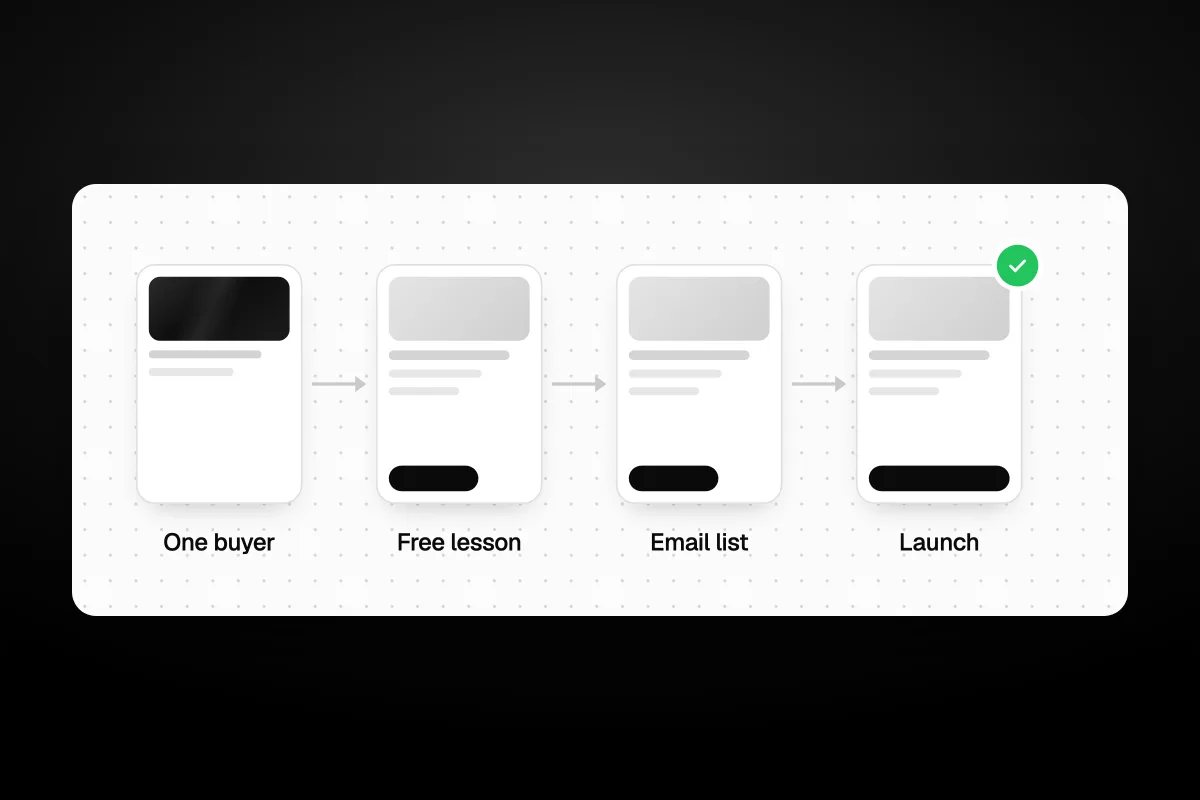
To market an online course, work in order: pick one buyer, pre-sell the course before you build it, give away a free lesson to grow an email list, then launch. Run ads last, once you know what makes people buy. Most guides hand you 50 ideas at once. The order is what makes any of them work.
Here is the order, short version:
- One buyer. Name the one person the course is for, and the one result they want.
- Pre-sell. Sell a first round before you record it all.
- Free lesson. Give one real lesson away in return for an email address.
- Email list. Grow it every week, not only in launch week.
- Launch. A webinar or a challenge, then a cart that opens and closes on set dates.
- Ads. Only once a launch has sold, and only to the free lesson.
What should you do first to market an online course?
Pick the one buyer your course is for. Everything else hangs on it: what you pre-sell, what the free lesson teaches, what you email about and who your ads reach. Skip it and every later step gets harder.
The order matters because each step tells you something the next one needs. A pre-sale tells you if people will pay. The free lesson tells you what they want to learn first. The email list gives you people to launch to. A launch tells you what makes them buy. Only then do ads have something proven to send people to.
Run ads first and you test everything at once. If nobody buys, you cannot tell if it was the ad, the page, the price or the course.
| Step | What you get from it | Move on when |
|---|---|---|
| One buyer | A one-line promise | You can say who it is for in one sentence |
| Pre-sell | First buyers and real feedback | Enough people paid to make it worth building |
| Free lesson | A reason to join your list | People finish it and reply |
| Email list | People who hear from you every week | It grows a little every week |
| Launch | Sales in a set window, and what made people buy | The cart has opened and closed |
| Ads | More people into the free lesson | You know what a sign-up is worth to you |
One note before you start. If you sell coaching on a call, not a course from a page, the order is a little different. Read how to get coaching clients instead.
Who is the one buyer your course is for?
Your one buyer is a single kind of person, with one problem, who wants one result. Not "anyone who wants to get better at photos". Something closer to "parents who want sharp photos of their kids indoors, with the phone they already have". That is a made-up example, but you can see the difference. A parent reads the second one and thinks: that's me.
To find your one buyer:
- Look at who already asks you. The questions in your comments, DMs and replies tell you who trusts you and what they want.
- Talk to a handful of them. Ask what they have tried, what went wrong and what they would pay to have fixed. Write down their exact words.
- Write a one-line promise. Who it is for, the result, and the pain it skips. Use their words, not yours.
- Test it on a stranger. Can they tell in five seconds if the course is for them? If not, narrow it again.
It feels like a smaller market. It is. But a narrow promise is easier to sell, easier to write ads for and easier to get people talking about. You can widen it later, once the first version sells.
A course for everyone is a course nobody feels is meant for them.
How do you pre-sell a course before you build it?
Sell a first round, at a founding price, with a start date, before you record the whole thing. Then build it with the people who paid. If not enough people buy, you have lost a few weeks, not a few months of recording.
- Write one simple sales page. Who it is for, the promise, the module titles, the start date, the price and the refund terms. That is enough.
- Pick a go-ahead number. Decide how many buyers you need to go ahead. If you do not hit it by the date, refund everyone and say why.
- Offer it to warm people first. Past clients, people who asked you about this, your current followers. A short email and a few posts are enough to start.
- Teach the first round live. Record each session. Those recordings, cleaned up, become the course.
- Ask what was missing. Your first buyers will tell you which lessons to add and which to cut.
A pre-sale also tests your sales page. That page does more work than most people think. It is the one page every buyer reads before they pay.
Be careful what you promise. Promise what the course teaches, not what students will earn. In 2023 the US Federal Trade Commission acted against Lurn, an online business coaching seller, over what it called "bogus earnings claims" (FTC, 28 September 2023). The order it announced would bar the defendants from misleading or unsubstantiated earnings claims. If your course is about making money, have someone check your sales page. This is not legal advice.
Why give a free lesson?
A free lesson lets people try your teaching before they pay, and gives them a reason to join your email list. It does two jobs at once. It builds trust, and it builds the list you will launch to.
A good free lesson:
- Solves one small problem from inside the course. A real win, not a teaser for the paid part.
- Is short. Something a busy person can finish in one sitting.
- Is for the one buyer. If it pulls in people who would never buy the course, it grows the wrong list.
- Ends with the next step. What the course covers next, and when it opens.
It can be a short video, a one-page guide, a template or a few emails. The format matters less than the win. We go deeper on this in how to create a high-converting lead magnet. A free lesson is a lead magnet with one extra rule: it has to sound like the course.
If the free lesson is good, people trust that the paid one will be too.
How do you grow an email list for a course?
Point everything you already do at one free lesson sign-up page, then email the list every week. A list you only email at launch time goes cold. A list that hears from you every week is ready when the cart opens.
Ways to send people to the free lesson:
- Put the sign-up link in your bio, your email signature and the top of your website.
- End every post, video and podcast with one line about the free lesson.
- Pin a post about it on each social account you use.
- Go on other people's podcasts and newsletters that reach your one buyer. Offer the free lesson, not the course.
- Swap mentions with a creator whose buyers would want your course next.
Then keep the list warm. One useful email a week is enough. Answer a question you got, share a student's question, teach a small idea. Not every email needs to sell.
Know the rules. In the US, CAN-SPAM covers all commercial email. The FTC says "Your message must include your valid physical postal address," and you have 10 business days to act on an unsubscribe request. Each email that breaks the law can cost up to $53,088 (FTC, CAN-SPAM Act: A Compliance Guide for Business, checked 26 October 2026). Other countries have their own rules. Only email people who signed up. This is not legal advice.
Should you run a webinar or a challenge?
Run a webinar if your course solves one clear problem you can teach in about an hour. Run a challenge if your buyers need to see themselves make progress over a few days before they believe they can do it. Both do the same job: they warm people up, then open the cart.
| Webinar | Challenge | |
|---|---|---|
| Length | One live session, plus a replay | A few days, one short task a day |
| Best for | A clear problem with a clear method | A skill or habit people doubt they can build |
| What it asks of you | One strong talk and good follow-up emails | Showing up every day, and a group to run |
| The risk | People sign up and never show up | People drop off by the middle day |
If you are new to both, start with a webinar. It is less work to run, and the replay can keep working after launch week. We set out the build in how to build a webinar funnel that generates qualified leads.
Whichever you pick, the launch itself follows the same steps. Waitlist. Warm-up. Cart open. Cart close on a real deadline, with reminder emails on the last day. Then a welcome for new buyers, so they start the course.
Every part has to work at the same moment. For Dirk DeBruin's launch at Intelligent Crypto, we built the landing page, worked on the checkout and built the Instagram DM system. Our homepage lists it as a $100K launch. One launch is not a promise for yours. It does show how much rides on the pages and the checkout working on the day.
When should you run ads?
Run ads after a launch has sold, and send them to your free lesson, not straight to the sales page. By then you know who buys, which words they respond to and roughly what a new sign-up is worth to you.
Here is the sum. These are made-up round numbers to show how it works. They are not real results. Say 100 people signed up for your free lesson, and 3 bought a $300 course in the launch. That is $900 from 100 sign-ups, or $9 a sign-up before costs. Now you know the most you can pay for a sign-up and still come out ahead.
Without that number, you are guessing. That is why ads come last in the order, not first.
When you start:
- Send ads to the free lesson. A stranger has no reason to trust you yet. A free lesson is an easy first yes.
- Use the words from your launch. The subject lines people opened and the questions they asked make the best ad copy.
- Start small. One audience, a few ads, a small daily budget. Turn off what does not bring sign-ups.
- Track sign-ups through to sales. Cost per sign-up is the early number. Cost per buyer is the real one.
The best time to switch ads on is a few weeks before your next launch, so the new people are on your list and warm by cart open.
Who should market your course for you?
If you are just starting, do it yourself on an all-in-one course platform. If you already sell and want launches, pages, emails and ads run for you, hand it over.
| Option | What it costs | Best fit |
|---|---|---|
| An all-in-one platform, such as Podia | Mover plan: $42 a month billed yearly, plus 5% fees, with email for up to 100 subscribers. Higher plans cost more | A new course and a small list |
| Havstock Unlimited | $4,995 USD a month, plus ad spend and small usage fees for texts, emails and AI chat | Creators who already sell and want the whole launch run for them |
Podia prices are from its pricing page, checked 26 October 2026. If you have a new course and a small list, a platform like Podia is the better pick. You can host the course, take payment and email your list in one place, for far less than an agency.
If you already have buyers and want to stop rebuilding every launch by hand, that is what Havstock Unlimited does. We write and build your sales pages and checkout, write the launch emails, run ads to your free lesson or waitlist, and set up an AI chat on your sales page that answers questions about the course. See what we run for course creators. We do not film or edit your course videos, so the teaching stays with you.
FAQ
How do I market my online course for free?
Pick one buyer, then give away one free lesson in return for an email address. Point every post, video and podcast guest spot at that free lesson, and email your list every week. Pre-sell a first round to people who already trust you. All of that costs time, not money. Save paid ads for later.
How do I get my first students for an online course?
Start with people who already know you: past clients, followers and anyone who has asked you about the topic. Offer them a first round at a founding price, with a start date, and teach it live. Their feedback shapes the course, and their results give you honest stories to share next time.
How big should my email list be before I launch?
There is no magic number. A small list of the right people beats a big list of the wrong ones. A pre-sale tells you more than list size does. If your go-ahead number of people pay, you have enough to launch. If not, keep growing the list with your free lesson first.
Do I need a website to sell an online course?
Not a full one. You need a sign-up page for your free lesson, a sales page and a checkout that works. You can build those on a course platform or on your own site. A fuller site helps later, when you want people to find you on Google and in AI answers between launches.
Should I launch with a webinar or a challenge?
A webinar suits a course that solves one clear problem you can teach in about an hour. A challenge suits a skill people doubt they can build, because they make small progress each day. If you are new to both, start with a webinar. It is less work, and the replay keeps working after launch.
When should I start running ads for my course?
After your first launch has sold. Then you know who buys, which words work and roughly what a sign-up is worth. Send ads to your free lesson, not straight to the sales page. Start small, a few weeks before your next launch, and track every sign-up through to a sale.
What is the best way to promote an online course?
There is no single best channel. What works is the order: one buyer, a pre-sale, a free lesson, a growing email list, then a launch. Each step makes the next one cheaper. Ads come last, once you know what makes people buy. Skipping steps is the most common reason a launch goes quiet.
That is how to market an online course in order. Start with your one buyer this week. Write the one-line promise, show it to a few people who fit it, and fix it until they say "that's me". Then pre-sell, and let real buyers tell you what to build.