 Nathan Field
Speed to lead is how fast you reply to a new enquiry, and replying in minutes beats replying in hours almost every time. A lead who fills in your form or rings your number is hot for a short window. Catch them while they are still looking and you win the job. Wait a day and they have booked someone else. This guide explains what speed to lead means, why fast replies win, what the research says, and how a small business can reply in minutes without a person glued to the phone.
The short answer
Speed to lead is the time between a lead reaching out and you responding. Fast wins. Most buyers hire the first business that answers, not the best one. The fix is simple. Reply in under five minutes, every time, with automation doing the first touch so nobody has to watch the phone all day.
What does speed to lead mean?
Speed to lead means the gap between someone contacting you and you getting back to them. It is a clock. It starts the second a lead submits a form, sends a text, rings your line, or messages your page. It stops when you reply with something real, not an email that lands two hours later.
The idea comes from sales teams, but it matters most for small service businesses. A plumber, a clinic, a law firm, a coach. These buyers have a problem now. They are not browsing. They want it fixed today, so they contact three or four businesses and go with whoever picks up first.
Here is the part people miss. Speed to lead is not about being the cheapest or the best reviewed. It is about being there. A slower, pricier competitor who answers in two minutes will beat you if your reply shows up tomorrow. The enquiry has a short shelf life, and the clock is always running.
Why do fast replies win more jobs?
Fast replies win because a new lead is at peak intent the moment they reach out. That intent fades fast. When someone needs a tradesperson or books a consult, they feel the urgency right then. They have their card out, their calendar open, their mind made up to act.
Reach them in that window and the conversation is easy. They remember filling in your form. They are still on your website. They have not yet called the next five businesses on the list. You are talking to a warm buyer, not chasing a cold one.
Leave it an hour and everything gets harder. The feeling has cooled. They are back at work, driving, or putting the kids to bed. Now you are interrupting them. Worse, someone else may have already called, booked them, and closed the door.
The first business to respond does not just get a head start. It often gets the whole job, because the buyer stops looking the moment someone competent picks up.
This is why a quick, plain reply beats a slow, polished one. The buyer is not grading your grammar. They are checking whether you exist and whether you can help. Answer first and you are in the race. Answer last and you are a quote they never open.
What does the research say about response time?
The research is clear on one thing: most companies respond far too slowly. The best known study is The Short Life of Online Sales Leads, by James Oldroyd, Kristina McElheran and David Elkington, published in Harvard Business Review in 2011. Its finding, in the authors' own words, is that "most companies are not responding nearly fast enough" to online enquiries.
That study looked at how businesses handled inbound web leads and found a big gap between how fast buyers expect a reply and how fast firms actually give one. The takeaway is not a magic number. It is a direction. The faster you make contact, the more likely you are to reach the person and move them into a real conversation.
You will see a famous "reply in five minutes" claim quoted all over the web, often with a specific multiple attached. Treat those exact figures with care. Many trace back to industry write-ups rather than the published paper, and the numbers shift from one retelling to the next. The safe, honest version is the one the study itself supports. Speed matters a lot, and slow replies cost you leads.
What holds up across every version is the pattern. Intent is highest at the start and drops quickly. So the goal is not to hit a perfect second. It is to make your first response automatic and near instant, so you are never the business that replied too late.
How fast is fast enough?
Fast enough means minutes, not hours. For most service businesses, a reply inside five minutes is the target, and the first touch should feel instant. You do not need to solve the problem in that window. You need to show up, acknowledge them, and start the conversation before they move on.
Think of it in two steps. The first touch is automatic and lands in seconds. A text, a chat reply, a confirmation. The second touch is a human, ideally within a few minutes, picking up where the automation left off. The automation buys you time. The human closes the gap.
Here is a simple way to grade your own speed to lead.
| Response time | What it means for the lead |
|---|---|
| Under 5 minutes | Peak intent. You are likely first. Easy conversation. |
| 5 to 60 minutes | Still warm, but competitors may have replied too. |
| 1 to 24 hours | Cooling fast. Often already booked someone else. |
| Over 24 hours | Mostly dead. You are now a quote they ignore. |
The point of the table is not the exact minutes. It is the shape. Every hour you wait, your odds fall. So the businesses that win are not the ones with the best sales script. They are the ones who simply answer first, every single time, even at 9pm on a Sunday.
How can a small business reply in minutes without sitting by the phone?
You automate the first reply so a person never has to watch the phone. The trick is to separate the instant acknowledgement from the real conversation. Software handles the first second. A human follows up when they can. Here is the setup that makes it work.
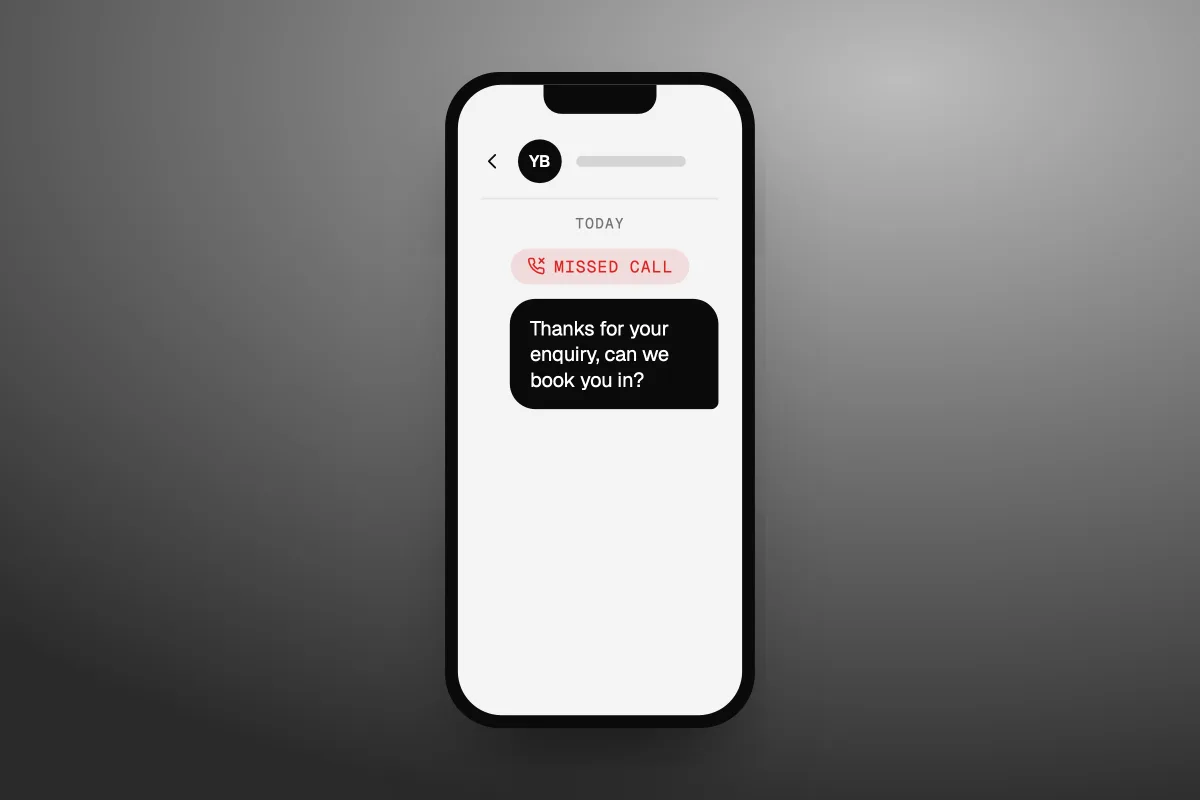
- Missed call text back. When a call comes in and nobody answers, the system sends an instant text. Most people will not leave a voicemail, but they will read a text. A missed call becomes a live lead instead of a lost one.
- Instant auto-reply on every channel. Form, chat, text, or social message, the lead gets a reply in seconds. Keep it short and human. Something like, Thanks for your enquiry, can we book you in? That one line holds their attention while a person gets ready to take over.
- An answering setup for calls. A live answering service or an AI receptionist picks up when your team cannot, takes the details, and books the job or passes it on. The phone never rings out.
- Smart routing. The enquiry goes straight to whoever can act on it, by text, app, or email, with the lead's details attached. No one has to check three inboxes to find it.
- A clear handoff. The automation starts the chat. A human finishes it. The lead should never feel like they are talking to a wall, so the first human reply comes fast and refers to what they asked for.
Picture it in action. A lead fills in your form at 7:42pm. By 7:43pm they get a text: "Thanks for your enquiry, can we book you in?" Replied in 2 minutes, before they even thought about the next business. That is speed to lead with no one sitting by the phone.
Automation is not there to replace the conversation. It is there to hold the door open until a human can walk through it.
If you want to go deeper on the pieces, we have full guides on missed call text back and an answering service for contractors. Both plug straight into this setup.
What can speed to lead not fix?
Speed to lead gets you into the conversation. It does not win the conversation for you. If your offer is weak, your pricing is unclear, or your follow-up is sloppy, answering fast just means you lose the lead faster. Be honest about that.
Speed also cannot create leads that are not there. If your ads, SEO, or referrals are not sending enough enquiries, a quick reply has nothing to reply to. Speed to lead is a conversion tool, not a lead source. You still need people reaching out in the first place.
And automation has limits. An instant text that sounds like a robot can put people off. A reply that promises a callback you never make is worse than no reply at all. The tools only work if the human side holds up. The system buys you minutes. What you do with those minutes is still on you.
One more honest point. Not every lead is a good one. Replying in seconds to tyre kickers and spam wastes time. Smart routing and a few qualifying questions help, but you will still field some junk. That is the cost of being easy to reach, and it is worth paying.
How do I measure my speed to lead?
You measure it by tracking the time from each enquiry to your first real reply. Most CRMs timestamp when a lead comes in and when you respond, so the gap is right there. If you are not tracking it, start. You cannot improve a number you never look at.
Pull a week of leads and check three things. Your average first response time. Your slowest reply. And how many leads waited more than an hour. That last number usually hurts, and it is where the fastest wins hide.
Then watch it over time. As you add the auto-reply, the missed call text back, and proper routing, your average should drop from hours to minutes. Pair that with your booking rate and you will see the link for yourself. Faster replies, more jobs booked. That is the whole case for speed to lead, in your own numbers.
FAQ
What is a good speed to lead time?
Under five minutes is the target for most service businesses, with the very first touch landing in seconds. You do not have to close the sale that fast. You just need to acknowledge the lead and start the conversation before a competitor does.
Does speed to lead really matter for small businesses?
Yes, often more than for big firms. Small service buyers want their problem solved now, so they contact several businesses and hire whoever answers first. A fast reply levels the field against larger, pricier competitors who are slow to get back.
Can I automate my first reply?
Yes. An instant auto-reply by text, chat, or email handles the first touch in seconds, with a line like "Thanks for your enquiry, can we book you in?" A human then follows up within minutes. The automation holds attention until a person takes over.
What is missed call text back?
Missed call text back sends an automatic text whenever a call goes unanswered. Most people will not leave a voicemail, but they will read a text. It turns a missed call into a live lead instead of a lost one, with no extra effort from you.
Will fast replies annoy leads?
Not if they sound human and helpful. People expect a quick acknowledgement when they reach out. The risk is a robotic message or a promised callback that never comes. Keep the first reply short and real, then make sure a person actually follows up.
Is speed to lead enough on its own?
No. Speed gets you into the conversation. Your offer, pricing, and follow-up still decide whether you win it. Answering fast with a weak pitch just loses the lead quicker. Treat speed as one part of a system, not the whole thing.
How do I track my response time?
Most CRMs timestamp when a lead arrives and when you reply, so the gap is recorded for you. Review a week of leads, note your average and slowest reply, and count how many waited over an hour. That is your baseline to improve.
Speed to lead is one of the fastest ways to turn more of the enquiries you already get into booked jobs, and it costs you nothing but a bit of setup. If you would rather have the missed call text back, auto-replies, routing, and follow-up built and run for you as part of your full marketing, that is exactly what Havstock Unlimited handles for one flat monthly fee. If you are weighing it against hiring or an agency, our guide to what a marketing subscription is breaks down how the model works.