
 Nathan Field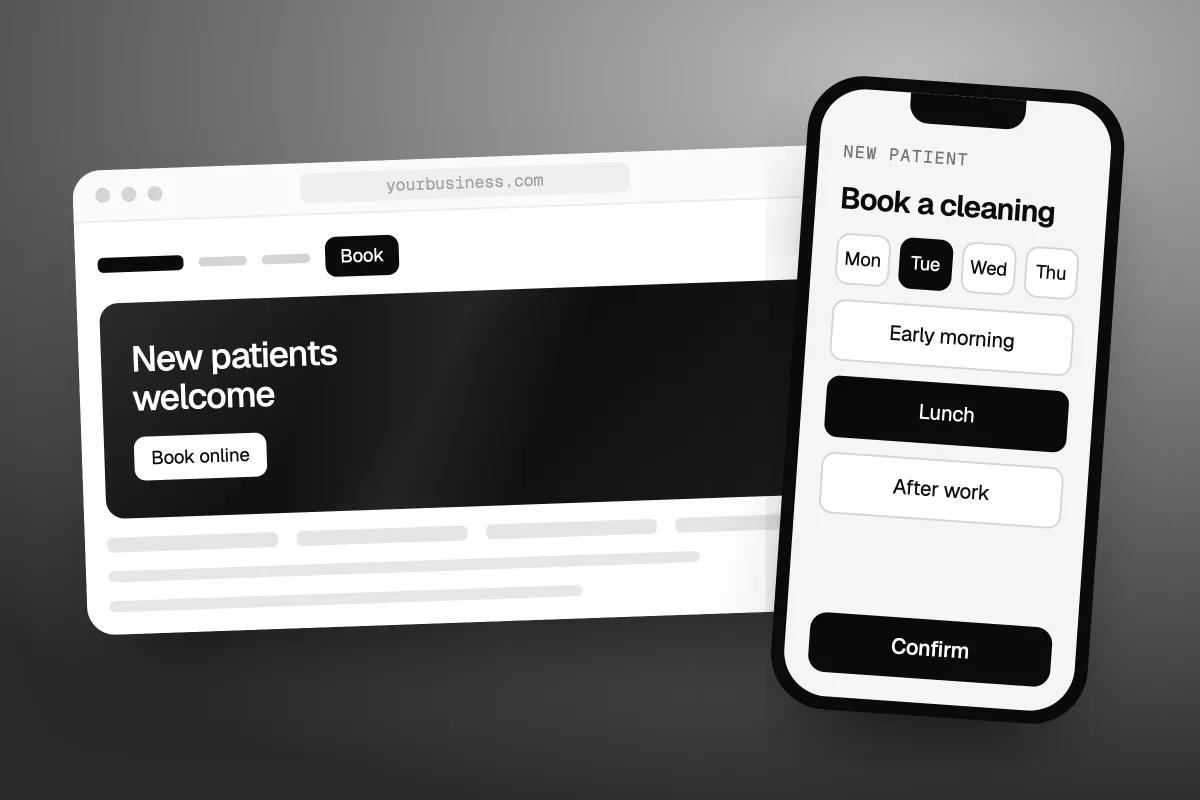
The best marketing ideas for dental practice owners are the plain ones that turn people who already want a dentist into booked visits. A phone that gets answered. Booking that takes a minute. Overdue patients brought back. A steady flow of Google reviews. Ads and social media come after that, not before.
Most lists give you a long run of ideas in no order, with a charity fun run next to Google ads. This one ranks 12 ideas by how much they pay back, gives each a first step, and flags the rules most lists skip: claims in dental ads, rewards for referrals, and patient privacy when you reply to a review.
The short answer
Fix the leaks first: answer every call, make booking easy, bring back overdue patients and follow up every treatment plan. Then build what you own: Google reviews, your Google profile, a page for each treatment and a few referral partners. Add paid ads and social media last, and check every ad against your state dental board rules.
The 12 ideas, ranked
The order is our opinion. The first four work on people who already want to see you, which is why they pay back fastest.
| Rank | Idea | Who it brings in | How fast it works |
|---|---|---|---|
| 1 | Answer every call, text back the ones you miss | New and existing patients | Days |
| 2 | Make booking take one minute | New patients | Days |
| 3 | Bring back overdue patients | Existing patients | Days |
| 4 | Follow up every treatment plan | Existing patients | Weeks |
| 5 | Ask every patient for a Google review | New patients | Months to build up |
| 6 | Fix your Google Business Profile | New patients | Weeks |
| 7 | Give each treatment its own page | New patients | Months |
| 8 | Ask for referrals, the safe way | New patients | Months |
| 9 | Work with local partners | New patients | Months |
| 10 | Remind patients about unused benefits | Existing patients | Weeks |
| 11 | Google search ads for the treatments you want | New patients | Days |
| 12 | Social media and short videos | Both | Months |
Why this order? Owners tend to pick the fun idea, like a video tour, while the phone rings out at lunch. The American Dental Association's own tips start somewhere duller: set benchmarks like more calls and fewer no-shows, and have the front desk ask every first-time caller how they heard about you (ADA News, March 2023). We agree. Count first, fix the leaks, then spend.
New patient marketing only pays if someone answers when the new patient calls.
Fix the leaks first
These four cost the least, because the demand is already there. You just have not closed the loop.
1. Answer every call, and text back the ones you miss
Why it matters: someone with a toothache calls the first practice they find on the map. If the phone rings out while your front desk checks in a patient, they call the next one.
First step: pull last week's call log and count the missed calls, in hours and after hours. Decide who covers lunch, evenings and the busy hour at the counter. Switch on an automatic text to every missed call. Our guide to a dental answering service compares the ways to cover the phone, and our missed call text back guide shows what that first text should say.
2. Make booking take one minute
Why it matters: people look for a dentist at night. A parent at 9pm wants to know if you take their insurance and can see both kids on a Saturday. If your site does not say, they try the next one. A patient who wants to book a cleaning should not have to wait for the office to open.
First step: build one "New patients welcome" page. Put on it the insurance plans you take, what happens at the first visit, price ranges if you can give them, any early morning, after work or Saturday times you offer, and a clear "Book online" button. Then add the same booking link to your Google Business Profile. More on how to automate appointment scheduling.
3. Bring back overdue patients
Why it matters: in 2025, 66.7% of US adults had a dental exam or cleaning in the past year (CDC FastStats, 2025 National Health Interview Survey). So about one adult in three did not. Some are already in your practice software, and you have their number.
First step: run a report of every patient with no visit in 12 to 24 months and nothing booked. Text each one a booking link: "It has been a while since your last visit. Want us to find you a time?" Email a week later. Only message people who agreed to hear from you. Then set up recall reminders so the list never grows that big again.
Your overdue list is the cheapest source of patients you have. You already paid to win them once.
4. Follow up every treatment plan
Why it matters: big treatments like implants, crowns and clear aligners are rarely decided in the chair. The patient goes home to check the cost and talk it over. Many never call back. Not because they said no. Life got in the way. A plan nobody booked is work you have already diagnosed.
First step: list every treatment plan from the last three months with nothing booked. Call or text each patient: "Any questions about your plan? Happy to go over the cost or ways to pay." Then make it a habit: a text two days after the visit, a call a week later, an email a month later, then stop. Keep the list in a CRM. Here is how to automate follow-up without losing the human touch. A short guide to costs can help people weighing up a big treatment, but that is a topic of its own.
How to attract new patients to your dental practice
Ideas 5 to 9 bring in people who have never been to you. They take longer. But they keep working when you stop spending, and no other practice shares the patient.
5. Ask every patient for a Google review, the same day
Why it matters: in BrightLocal's 2026 survey of 1,002 US consumers, 47% said they will not use a business with fewer than 20 reviews, and 74% look for reviews from the last three months (BrightLocal Local Consumer Review Survey 2026). Google also counts your reviews when it ranks local results.
First step: text your review link to every patient within an hour of their visit. Ask everyone, not just the ones you expect to be happy. Google bans asking only happy customers, and bans offering anything in return for a review, discounts and free services included (Google Maps content policy).
The rule most lists skip: reply without patient details. In December 2022 a California dental practice paid $23,000 to settle with the HHS Office for Civil Rights after it disclosed patient information in replies to online reviews (HHS, 14 December 2022). Never confirm the reviewer is a patient, and never mention a visit or treatment. Thank them and invite them to call the office manager. For the full setup, see our guide to a review and reputation system.
Thank the reviewer. Never confirm they are your patient.
6. Fix your Google Business Profile
Why it matters: when someone searches for a dentist near them, the map comes first. Google says those results mainly come down to relevance, distance and popularity, and that you cannot pay for a better local ranking (Google Business Profile Help). You cannot move your building, so work on the other two.
First step: give it one hour this week.
- Main category: Dentist, unless you hold a specialty your state recognizes.
- Services: the names patients use, like emergency visits, dental implants, clear aligners and children's dentistry.
- Hours: the hours someone really answers the phone.
- Photos: your real team and treatment rooms. No stock photos.
- Booking link: the same one from idea 2.
7. Give each treatment its own page
Why it matters: someone searching for implants wants a page about implants: what happens, how long it takes, a cost range, ways to pay, and who does it. One "services" page listing 20 treatments rarely wins those searches. Pages like these are the base of SEO and AEO, showing up in Google and in AI answers. BrightLocal found use of ChatGPT and similar tools for local recommendations jumped from 6% to 45% of consumers in a year. Here is how to get recommended by ChatGPT.
First step: list the five treatments you most want more of. Write one page a month, starting with the one that earns the most per hour of chair time. Use real photos. Before-and-after photos need the patient's written consent and must show real, typical results.
8. Ask for referrals, the safe way
Why it matters: a referred patient arrives already trusting you, and often refers others too.
First step: ask at the end of a good visit, when patients are happiest. Hand them a card or text a link they can forward. Send a handwritten thank-you note when someone new names them.
Check before you pay for referrals. Some top-ranking lists say to give discounts or free treatment for referrals. Be careful. The ADA Code bars dentists from giving or taking rebates or split fees. The ADA also warns that if you provide services paid for by a federal health care program, the federal Anti-Kickback Statute may stop you offering some discounts (ADA, Marketing and advertising). State rules differ. Ask your state dental board or a health care lawyer before you offer any reward.
A thank-you note is free and breaks no rules. A reward for a referral might.
9. Work with local partners
Why it matters: pediatricians, school nurses, local HR managers and the specialists you refer to all get asked "do you know a good dentist?" One good partner can send patients for years.
First step: pick two. Offer a lunch-and-learn on oral health at a local employer, or visit the nearest pediatric practices with a direct number for urgent cases. Then keep your promise: a quick reply and a fast appointment.
Seasonal dental marketing ideas
| When | Idea | First step |
|---|---|---|
| January | Many dental plans start a new benefits year | Remind insured patients their cleanings may be covered again, and fill early-year hygiene times |
| February | National Children's Dental Health Month | Use the ADA's free posters, coloring sheets and brushing calendar (ADA) for a school or library visit |
| Summer | Back-to-school checkups | Remind parents to book before term starts, and open a few extra child slots |
| October to December | Unused benefits before year end | See idea 10 |
10. Remind patients about unused benefits before year end
Why it matters: many dental plans have a yearly maximum that resets when the plan year starts, often in January. A patient with an open treatment plan and benefits left has a real reason to book now.
First step: in October, list patients with pending treatment and plans that renew in January. Send a plain message: "If your plan renews in January, you may have benefits left this year. Want us to check?" Check each plan before you promise anything.
Paid ads and social media: last, not first
Ads pour fuel on what you already have. If the phone rings out, ads just make the leak bigger.
11. Google search ads for the treatments you want
Why it matters: someone searching for an emergency dentist or dental implants near them wants to book now. You pay per click whether they book or not, so the page the ad sends them to (idea 7) has to do its job.
The rules for dental ads. Under the ADA Code, no dentist may advertise in a way that is "false or misleading in any material respect" (ADA). Most states also regulate how dentists advertise specialties, and the FTC polices truth in advertising. In practice:
- No promised results, like a "pain-free" visit or a "perfect smile" you cannot guarantee.
- No "best dentist in town" claims you cannot back up, and no specialist titles your state does not allow.
- Prices and discounts must be real, with any conditions shown clearly.
- Check your state dental board's advertising rules before any ad runs.
First step: pick one treatment with a good margin and free chair time. Run search ads on it alone, sending people to its page, for one month. Count the new patients who booked, not the clicks. Facebook and Instagram ads can work for planned treatments too, but they have their own rules for health topics and need a separate check.
12. Social media and short videos
Why it matters: nervous patients want to see who they will meet before they book. But social posts rarely bring in someone with a toothache tonight. That is why this comes last: it takes the most time per new patient.
First step: film three short clips on a phone. Meet the team. Walk from the front door to the chair. Explain a first visit. Post them on your site and Google profile as well as Instagram. Never film or post a patient without their written consent.
Ideas we would skip
Deep-discount coupon deals bring in deal-seekers, and the ADA warns they can clash with the Anti-Kickback Statute if you treat patients on federal health care programs. And skip the new logo until the phones are fixed. A better logo does not answer a missed call.
How to tell which ideas work
Write the source on every new patient: ask each first-time caller how they heard about you, and note it in your practice software. Once a month, divide what each source cost by the new patients it brought who actually sat in the chair. That cost per new patient is the number to compare.
What we would do first
We do not run marketing for a dental practice today, so this is our method, not a case study.
- Week 1: count missed calls, switch on missed call text back, and start asking every new caller how they heard about you.
- Week 2: the new patients page, the booking link on Google, and a review text after every visit.
- Weeks 3 and 4: the overdue patient list and treatment plan follow-up, both in a CRM.
- Month 2 on: one treatment page a month, then search ads on the treatment with the best margin.
If you would rather hand that work over, it is what Havstock Unlimited does: ads, your site and treatment pages, a CRM, missed call texts and follow-up, for one flat fee. It is a marketing subscription, and you own everything we build. At $4,995 USD a month it will not suit a small practice that is already full. See what we do for dental practices.
When this will not work
More patients will not help if you cannot see them. If hygiene is booked out for weeks and you cannot hire, fix capacity first. It also depends on the front desk. A missed call text or a treatment plan follow-up only works if someone replies when the patient writes back.
FAQ
How can I get more new patients for my dental practice?
Start by losing fewer. Answer every call and text back missed ones. Make booking easy with a clear new patients page. Then ask every patient for a Google review, fill in your Google Business Profile and give each treatment its own page. Add Google search ads once those basics work, starting with your best-margin treatment.
How much should a dental practice spend on marketing?
You will see rules of thumb quoted as a share of revenue. We could not find a primary source we trust for any of them. A better way: work out what a new patient is worth to you over a few years. Then spend on each source only while it brings patients in at a cost that leaves a margin.
Does social media marketing work for dentists?
It helps with trust more than with bookings. Nervous patients like to see the team and the rooms before they come in. But someone with a toothache searches Google, not Instagram. Use short videos to support your site and Google profile, and do not expect posts alone to fill the schedule.
Can dentists offer rewards for patient referrals?
Sometimes, but check first. The ADA Code bars dentists from giving or taking rebates or split fees, and the federal Anti-Kickback Statute can apply if you treat patients on federal health care programs. State dental board rules differ. A handwritten thank-you note is the low-risk option. Ask your board or a lawyer before offering anything of value.
How should a dentist reply to a bad online review?
Briefly, and without any patient details. Do not confirm the reviewer is a patient or mention their treatment. In 2022 a California dental practice paid $23,000 to settle with HHS after disclosing patient information in review replies. Thank them, say you take feedback seriously, and invite them to call the office manager.
How long does dental marketing take to work?
It depends on the idea. Answering calls, booking links and messages to overdue patients can work in days. Reviews and treatment pages take months to build. Search ads bring calls within days but cost money on every click. That is why we start with the fast, cheap fixes and build the slow ones alongside.
Those are the marketing ideas for dental practice owners we would bet on, in the order we would do them. Start with your missed calls this week. Once the phone is covered, every other idea on this list gets cheaper.