 Nathan Field
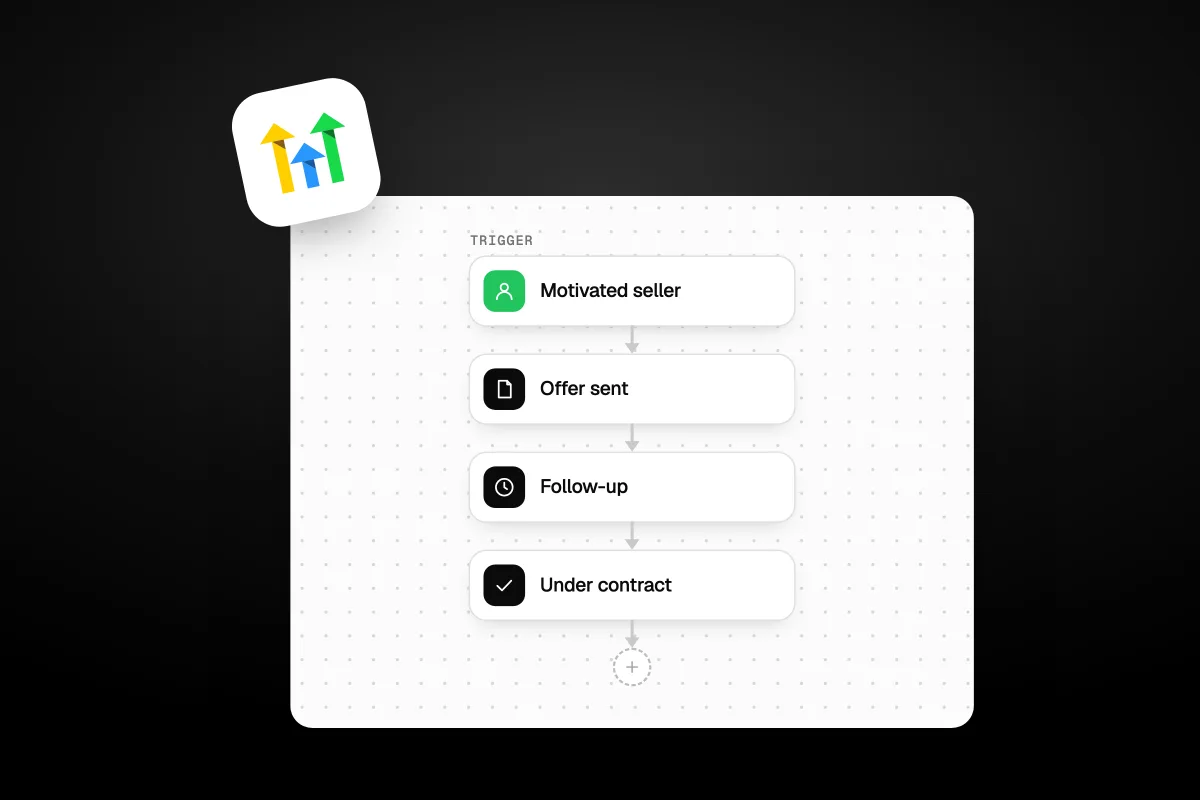
A CRM for real estate investors has to track deals, not clients: the motivated seller, the property, every offer sent, every follow-up, and the day the deal goes under contract. So a CRM for real estate investing is a different job from an agent's CRM, which tracks buyers and sellers who hire the agent. Investors buy the property themselves, work from big lists, and close most deals after a long chase. Below is what an investor's CRM must track, how REsimpli, Left Main and GoHighLevel compare on their own pricing pages (checked 16 November 2026), and which one fits which kind of investor.
The short answer
Wholesalers who cold call, text and mail big lists should look at an investor CRM like REsimpli (from $249 a month billed yearly), with list stacking, skip tracing and a dialer built in. Investors whose leads come from ads, websites and referrals may get more from GoHighLevel (from $97 a month) plus a data tool.
Why do investors need a different CRM than agents?
Investors need a different CRM because the deal flow runs the other way. An agent's CRM tracks people who might hire the agent: buyers, sellers, open house visitors and past clients. An investor's CRM tracks property owners who might sell to the investor, often people who never asked to be contacted.
That changes what the system has to do:
| Job | Agent's CRM | Investor's CRM |
|---|---|---|
| Where leads come from | Portals, open houses, referrals, the agent's own marketing | Lists (absentee owners, vacant, pre-foreclosure), direct mail, cold calls, texts, driving for dollars, ads |
| What a record is about | A person and their search | A property and its owner |
| Middle of the pipeline | Showings, listing appointments | Offers, counter-offers, follow-up |
| End of the pipeline | Closing and commission | Under contract, then closing, assignment or resale to a cash buyer |
| Data needs | Listing data | Owner details, equity, list stacking, skip tracing |
If you are an agent, our guide to GoHighLevel for real estate is the better read. This post is for wholesalers, flippers and buy-and-hold investors.
What must a real estate investor CRM track?
A real estate investor CRM must track every property from the first list pull to the closing table. Here are the stages that matter, in order.
Motivated seller leads
The top of the pipeline is a motivated seller: an owner with a reason to sell fast. Tired landlords, inherited houses, vacant homes and owners behind on payments are the usual signs. Your CRM should hold the property, the owner and, most of all, the lead source. If you spend money on mail, cold calls and ads, you need to know which one produced the deal, not just the lead.
Offer sent
Once you've talked to the seller and run the numbers, you make an offer. The CRM should log what you offered, when, and what the seller said. Many deals take more than one offer. A record of each one stops you from offering a seller a number you already beat last month.
Follow-up
This is the stage that makes or breaks investors. Many sellers say no to the first offer, then call back when their situation changes. The CRM's job is to make sure they hear from you when that happens. That means scheduled calls, texts and mail for every seller who said "not now", running for months, not days.
Under contract
When the seller signs, the deal moves to Under contract. Now the tasks change: title, inspections, the closing date, and, if you wholesale, finding a buyer. A CRM with transaction steps keeps those tasks visible.
Closing and dispositions
The last stage is the close, or the resale to a cash buyer. Wholesalers need a buyers list with what each buyer wants: area, price range, property type. Some investor CRMs include this. General CRMs can do it with tags and a second pipeline.
An agent's CRM tracks people who want to hire you. An investor's CRM tracks people you want to buy from.
How do REsimpli, Left Main and GoHighLevel compare?
REsimpli and Left Main are built only for investors. GoHighLevel is a general marketing CRM that investors adapt. Prices below come from each vendor's own pricing page, checked 16 November 2026.
| Tool and plan | Price on its page | Users | Worth knowing |
|---|---|---|---|
| REsimpli Solo | $299 a month, or $249 a month billed yearly | 1 | "Every feature on every plan". 20,000 list stacking records |
| REsimpli Team | $899 a month, or $699 a month billed yearly | 5 | 100,000 list stacking records |
| REsimpli Business | $2,199 a month, or $1,799 a month billed yearly | 15 | Unlimited list stacking records |
| Left Main Starter | $500 a month plus $3,000 implementation | 5 | CRM, cadences, dispo and transaction management, calling, SMS and mailing, property data |
| Left Main Launch | $1,200 a month, implementation included | Starter's 5 | Adds seller signals, AI tools and a customer success specialist |
| GoHighLevel Starter | $97 a month, or $970 a year | Unlimited | Pipelines, texting, email, calling, forms, websites and workflows. Usage charges for texts and calls |
The details behind the table:
- REsimpli prices by team size, not features. Its features list includes list stacking, list pulling, skip tracing, driving for dollars, direct mail, a seller website and a dialer. Its pricing page says every plan gets every feature. All plans include unlimited standard calling minutes and SMS under a fair use policy, with AI calling billed separately. Extra users cost $99 a month on yearly billing. There is a 14-day free trial and free onboarding.
- Left Main is built for bigger teams. Its pricing page lists Starter at $500 a month plus a $3,000 implementation fee, for 5 users. The Enterprise plan is $2,000 a month. It is a lot for a solo wholesaler, and aimed at teams replacing several tools.
- GoHighLevel is not an investor tool out of the box. Its pricing page doesn't list property data, list stacking or skip tracing. You build the investor pipeline yourself and bring the data from somewhere else. What you get is strong follow-up: workflows, two-way texting, email, calendars and websites for seller leads, all for unlimited users.
What does a real estate investor CRM cost?
A real estate investor CRM costs from $97 a month for a general CRM to $249 to $2,199 a month for investor-built tools, before data, mail and usage. The plan price is the smaller part for most investors. Budget for:
- Data. Lists, skip tracing and property data cost money. REsimpli includes list stacking records and list builder credits per month. On a general CRM you buy data separately.
- Calls and texts. REsimpli includes standard calling and SMS under fair use. GoHighLevel bills texts and calls by usage on top of the plan.
- Mail. Direct mail is printed and posted per piece, whatever CRM sends it.
- Setup. Left Main charges $3,000 for Starter's implementation. Other tools include onboarding, or leave setup to you.
- Users. Callers, acquisition reps and dispo managers each need a login. GoHighLevel lists unlimited users. REsimpli's plans include 1, 5 or 15 users. Price your real headcount.
Do the yearly maths before you sign. An investor-built CRM that saves you a separate dialer and data tool may cost less in total than a cheap CRM plus three add-ons.
Price the whole stack: CRM, data, dialer, texts and mail. The plan fee is the smallest line on most investors' bills.
How does follow-up win more deals?
Follow-up wins deals because a seller's situation changes over time, and the investor who is still in touch when it does gets the call. A landlord who laughs at your offer in March may call back in September after a bad tenant. If nobody followed up, they call whoever mailed them last.
You will see rules of thumb online about how many touches a deal takes. We haven't found a source we trust for a single number, so we won't quote one. What we can say: the follow-up has to be automatic, because no acquisition rep remembers 400 "maybe" sellers.
A follow-up plan that works in most CRMs:
- Tag every lead by temperature. Hot (wants to sell now), warm (maybe in a few months), cold (not now).
- Give each tag a cadence. Hot gets calls within days. Warm gets a call or text every few weeks. Cold gets a light touch every month or two.
- Mix the channels. Calls, texts, emails and mail. Some sellers only answer one of them.
- Move the card when they answer. A reply should stop the automation and create a task for a person.
- Never delete a dead lead. Move it to a long-term follow-up list instead.
In GoHighLevel, this is built with workflows: a trigger (a tag is added), actions (send a text, wait, create a task) and an exit when the seller replies. Our GoHighLevel workflows guide walks through how they fit together. If you want to build one with your own leads, our special link gets you a 30-day free trial of GoHighLevel (we may earn a commission from this link) plus a free live bootcamp. Sign up on GoHighLevel's own site and you get the standard 14 days, with no bootcamp.
The deal you close in September often started as the "no" you followed up on in March.
When does GoHighLevel fit, and when does REsimpli fit better?
Pick REsimpli, or another investor-built CRM, if your deals come from lists: cold calling, texting, direct mail and driving for dollars. List stacking, property data and a dialer built in will save you from wiring four tools together. For a wholesaler working lists every day, that is the better choice, even at the higher price.
Pick GoHighLevel if your deals come from inbound marketing: seller websites, Google and Facebook ads, referrals and a long email list. Its strength is the follow-up engine and the marketing tools around it. It also fits investors who run more than one business: Starter includes three sub-accounts.
Lists need a data tool. Inbound leads need a follow-up engine. Buy for the one that brings your deals.
This will not suit you if you want property data and a dialer in the same login with no setup. GoHighLevel can be connected to data and dialer tools, but someone has to build it, and that is real work.
The same split shows up in other industries. Our posts on a CRM for insurance agents and a CRM for coaches both land on the same rule: an industry tool for the industry's core job, a marketing CRM for leads and follow-up.
How do you set up a CRM for real estate investing?
Set up a CRM for real estate investing by building the pipeline first, then the lead sources, then the follow-up. Data and dialers come after.
- Build the stages. New lead, Contacted, Appointment, Offer sent, Follow-up, Under contract, Closed, Dead. Wholesalers add a dispo pipeline for buyers.
- Add the property fields. Address, owner name, type, condition, asking price, your offer, repair estimate and lead source.
- Connect your lead sources. Seller website forms, ad forms, inbound calls and imported lists, each tagged with its source.
- Turn on the first reply. A text within a minute of any inbound lead, and a missed call text.
- Build the follow-up. The hot, warm and cold cadences above.
- Set up the buyers list. A second pipeline or tag set for cash buyers, with their areas and price ranges.
- Review every week. Leads by source, offers sent and contracts signed. Cut the sources that don't produce contracts.
Prefer to have someone build and run this? GoHighLevel is the tool. Someone still has to do the work: the pipeline, the seller site, the ads and the follow-up. If you would rather hand that part over, see how Havstock Unlimited works, or read about our CRM and automations service. At $4,995 USD a month, it is for investors already spending on marketing. A new wholesaler is better off on an investor CRM's trial, learning the numbers first.
FAQ
What is the best CRM for real estate investors?
It depends on where your deals come from. List-driven wholesalers usually do best with an investor-built CRM like REsimpli, which includes list stacking, skip tracing and a dialer. Investors who rely on websites, ads and referrals often prefer GoHighLevel for its follow-up and marketing tools. Test both on a free trial with your own leads.
How much does REsimpli cost?
On its pricing page, checked 16 November 2026, REsimpli Solo is $299 a month or $249 a month billed yearly, for one user. Team is $899 a month or $699 billed yearly, for five users. Business is $2,199 a month or $1,799 billed yearly, for fifteen users. Every plan gets every feature.
Can I use GoHighLevel for real estate investing?
Yes, for leads and follow-up. You build an investor pipeline with stages like Motivated seller, Offer sent and Under contract, then add workflows for texts, emails and call tasks. Its pricing page doesn't list property data or list stacking, so you bring those from a separate tool. Starter is $97 a month.
Is there a free trial for GoHighLevel?
Yes. GoHighLevel's pricing page offers 14 days. Our special link gets you a 30-day free trial plus a free live bootcamp. The bootcamp page says you won't pay the subscription during the trial, but communication surcharges may apply, so texts and calls still cost money.
Do wholesalers need a different CRM than flippers?
Mostly the same core, with one extra. Both need seller leads, offers, follow-up and contracts tracked. Wholesalers also need a buyers list and a dispositions pipeline, because they resell the contract. Flippers need repair budgets and project tracking. Buy-and-hold investors add property management, which usually lives in a separate tool.
Can I just use a spreadsheet?
When you are starting out with a few leads, yes. A spreadsheet breaks when follow-up matters: it won't text a seller, remind you to call or tell you which mail campaign worked. Once you have more "maybe" sellers than you can remember, move to a CRM. Waiting longer usually costs deals.
So, which CRM for real estate investors should you pick?
Start from where your deals come from. List-heavy wholesalers should pick an investor-built tool with data and calling built in. Investors who win sellers through websites, ads and referrals can build a strong system on GoHighLevel. Either way, a CRM for real estate investing earns its fee in the follow-up: the motivated seller who said no today and yes six months later.