 Nathan Field
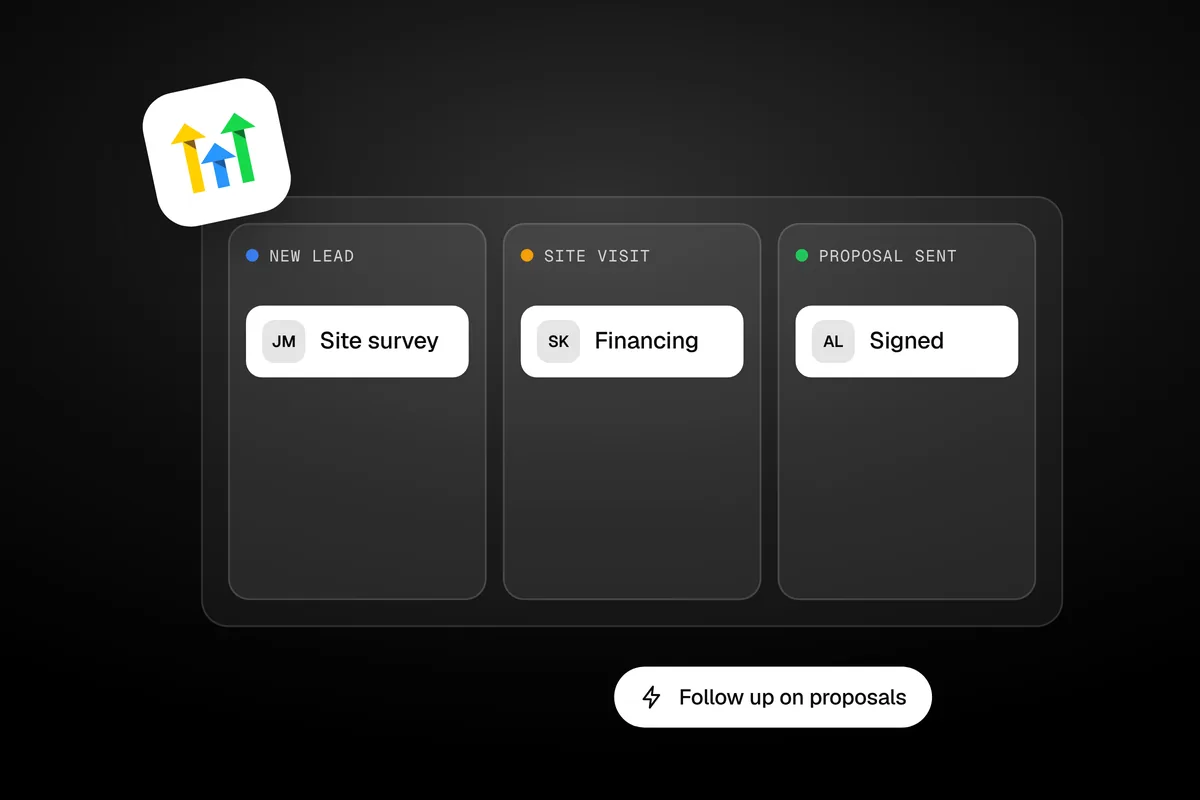
A CRM for solar has to carry a deal through a much longer road than most trades: lead, site survey, design and proposal, financing, contract, permits, install, inspection and turn-on. That is why solar companies often use two tools. Solar software like OpenSolar, Sunbase or Scoop handles design, proposals and project stages. A marketing CRM like GoHighLevel handles fast replies, follow-up on proposals and referrals. Below is what a solar CRM must do, what the main options cost on their own pages (checked 22 November 2026), and how to choose.
The short answer
If you are a small installer, start with solar software that covers design, proposals and project tracking. OpenSolar says its software is free for solar professionals, and Sunbase starts from $59 per user per month. Larger operations look at platforms like Scoop, from $1,158 a month. Add a marketing CRM like GoHighLevel (from $97 a month) when your problem is leads going cold and proposals with no follow-up.
Why does a solar company need a CRM?
A solar company needs a CRM because each sale has many steps, many people and a long wait between them. A homeowner who asks for a quote in March may not sign until May and may not have power on until later still. Without one system, details live in email, spreadsheets and people's heads.
Solar also loses deals in specific places:
- The first reply. Homeowners often ask several installers at once. The first good reply gets the site visit.
- After the proposal. The proposal goes out and nobody follows up. The homeowner goes quiet, then signs with someone who did.
- During financing and permits. Long gaps with no updates make customers nervous and cancellations rise.
- After install. Happy customers are the best referral source in solar, and most companies never ask.
A CRM fixes these by making each next step someone's job, with a date on it.
The proposal goes out and nobody follows up. The homeowner goes quiet, then signs with someone who did.
What should a CRM for solar do?
A CRM for solar should do six jobs.
Capture and answer leads fast
Leads come from your website, ads, door knocking and referrals. Every one should land in one place and get a reply within minutes, with an offer to book a site visit or a call.
Track every deal by stage
A pipeline with stages like "New lead", "Site visit", "Proposal sent", "Financing", "Signed" shows where each deal sits and which ones are stuck.
Follow up on proposals
The most valuable automation in solar. A text or email a few days after the proposal, then again a week later, with a simple question: "Any questions on the numbers?"
Keep customers updated through permits and install
Short updates at each project stage cut the "what's happening?" calls and the cancellations that come from silence.
Manage the install side
Site visits, crew schedules, documents and project stages. This is where solar-specific software is stronger than a general CRM.
Ask for reviews and referrals
Ask for a review when the system turns on. Ask for a referral a few weeks later, when the first bill arrives lower.
How do OpenSolar, Sunbase, Scoop and GoHighLevel compare?
OpenSolar, Sunbase and Scoop are built for solar or contractor operations. GoHighLevel is a marketing CRM. Prices are from each vendor's own page, checked 22 November 2026.
| Tool | Price on its page | What it lists |
|---|---|---|
| OpenSolar | Says its software is free for solar professionals | Leads, proposals and a Project Management CRM: project and customer records, custom workflows and stages, action assignment with due dates, calendar sync with Google Calendar or Outlook, documents |
| Sunbase | From $59 per user per month, customised to your needs | Pricing configured by business size, workflows and modules. Aimed at roofing, solar and construction contractors |
| Scoop | Residential and service plans from $1,158 a month. Commercial from $1,578 a month | Unlimited users, storage and devices, mobile field app, setup and onboarding at no extra cost. Annual term |
| GoHighLevel Starter | $97 a month, or $970 a year | CRM and pipelines, workflow builder, campaign builder, two-way SMS and email, unlimited contacts and users. Usage-based charges apply |
A note on OpenSolar: its CRM page sits in the "Pro" section of its site. Check what is included at your level before you plan around it. And Sunbase's $59 is a starting point, with the final price set by quote.
What does a solar CRM cost?
A solar CRM can cost nothing, a few hundred dollars a month, or over a thousand, depending on the tool and team size. The examples above run from free (OpenSolar) to $59 per user (Sunbase) to $1,158 a month and up (Scoop).
Three costs hide behind the headline price:
- Per-user pricing. A team of eight sales reps and office staff at $59 each is $472 a month before add-ons.
- Texts and calls. GoHighLevel says "usage based charges apply" to messaging and calls. Budget for them if you text every lead.
- Setup. Building stages, templates and follow-up messages takes days. Scoop says its setup is included. With other tools, it is your time or a consultant's.
Our free customer lifetime value calculator helps you weigh the price. In solar, one extra signed system a month usually pays for the tool many times over.
Do solar companies need two CRMs?
Many do, once marketing and operations are both busy. Here is how we would decide.
| Your situation | What to use |
|---|---|
| Small installer, mostly referrals, design and proposals are the main job | Solar software with built-in CRM, like OpenSolar |
| Growing team, many projects in flight, permits and installs are the headache | A project-focused platform, like Sunbase or Scoop |
| Running ads or door knocking, many leads, proposals going cold | Solar software for projects, plus a marketing CRM like GoHighLevel for follow-up |
If you run two tools, decide which one owns the customer record, and connect them or give one person the job of keeping them in step. Double entry is where details get lost.
When does GoHighLevel make sense for a solar company?
GoHighLevel makes sense for a solar company when you have leads but lose them in follow-up. Its workflows can text every new lead within a minute, book site visits into a calendar, move deals through a pipeline, chase proposals that go quiet, send project updates and ask for reviews and referrals after turn-on. Our GoHighLevel pipeline guide shows how deal stages work, and our workflows guide covers the automations.
What GoHighLevel does not do is solar design or proposals with system sizing. That is the job of solar software. Most installers who use GoHighLevel pair it with one.
To try it on your own leads, our special link gets you a 30-day free trial of GoHighLevel (we may earn a commission from this link) plus a free live bootcamp. Sign up on GoHighLevel's own site and you get the standard 14 days, with no bootcamp.
How do you set up a solar CRM pipeline?
Set up a solar pipeline with stages that match how your deals really move. A simple version:
- New lead: instant text reply, offer site visit times.
- Site visit booked: reminder the day before.
- Proposal sent: follow up after 3 days and after 10 days.
- Financing: update the customer on each step.
- Signed: welcome message and what happens next.
- Permits and install: an update at each milestone.
- System on: review request.
- Referral: a few weeks later, ask who else might want a quote.
Keep the stages few and clear. A pipeline with 20 stages is one nobody updates.
Who should run the solar CRM?
One named person should own the CRM: usually the sales manager or the office manager. They check stuck deals every week, make sure reps log every call, and fix the follow-up messages when replies drop. A CRM nobody owns turns into a list of names.
Our guide to speed to lead covers why the first reply matters so much, and our roofing CRM guide shows the same setup in another long-sale home service trade.
GoHighLevel is the tool. Someone still has to build and run it. If you would rather hand that part over, see how Havstock Unlimited works. We build and run follow-up, campaigns and pipelines as part of our CRM and automations service. At $4,995 USD a month it suits installers already spending on ads with a sales team to feed. A small installer will do better starting with free solar software and a weekend of setup.
FAQ
What is the best CRM for solar companies?
It depends on your size and problem. For design, proposals and project tracking, solar software like OpenSolar, Sunbase or Scoop is built for the job. For lead follow-up, proposal chasing and referrals, a marketing CRM like GoHighLevel fits. Many installers use one of each.
Is there a free CRM for solar?
OpenSolar says its software is free for solar professionals, and it includes lead and project management features. Check which features sit in which section of its site before you rely on them. Most other solar platforms are paid, with demos or trials instead of free plans.
How much does solar CRM software cost?
On the pages we checked on 22 November 2026, prices ran from free (OpenSolar) to $59 per user per month (Sunbase, starting price) to $1,158 a month and up (Scoop). GoHighLevel's Starter plan is $97 a month, plus usage charges for texts and calls.
Can GoHighLevel be used for solar sales?
Yes, for the sales and marketing side: lead capture, instant replies, site visit booking, pipelines, proposal follow-up, review requests and referral campaigns. It does not do solar system design or proposals with sizing, so most installers pair it with solar software.
What pipeline stages should a solar company use?
A simple pipeline: new lead, site visit booked, proposal sent, financing, signed, permits and install, system on, and referral. Each stage should trigger a clear next step, like a reminder or a customer update, so no deal sits without an owner.
How do solar companies get more referrals?
Ask at the right moment. A review request when the system turns on, then a referral ask a few weeks later when the customer sees their first lower bill. A CRM can send both on a timer for every job, so it never depends on memory.
So, which CRM should a solar company use?
Pick your CRM for solar by the problem that costs you most. If it is design, proposals and project tracking, start with solar software like OpenSolar, Sunbase or Scoop. If it is leads going cold and proposals with no follow-up, add a marketing CRM like GoHighLevel. Set up the instant reply and the proposal follow-up first. Those two win the most deals back.