 Nathan Field
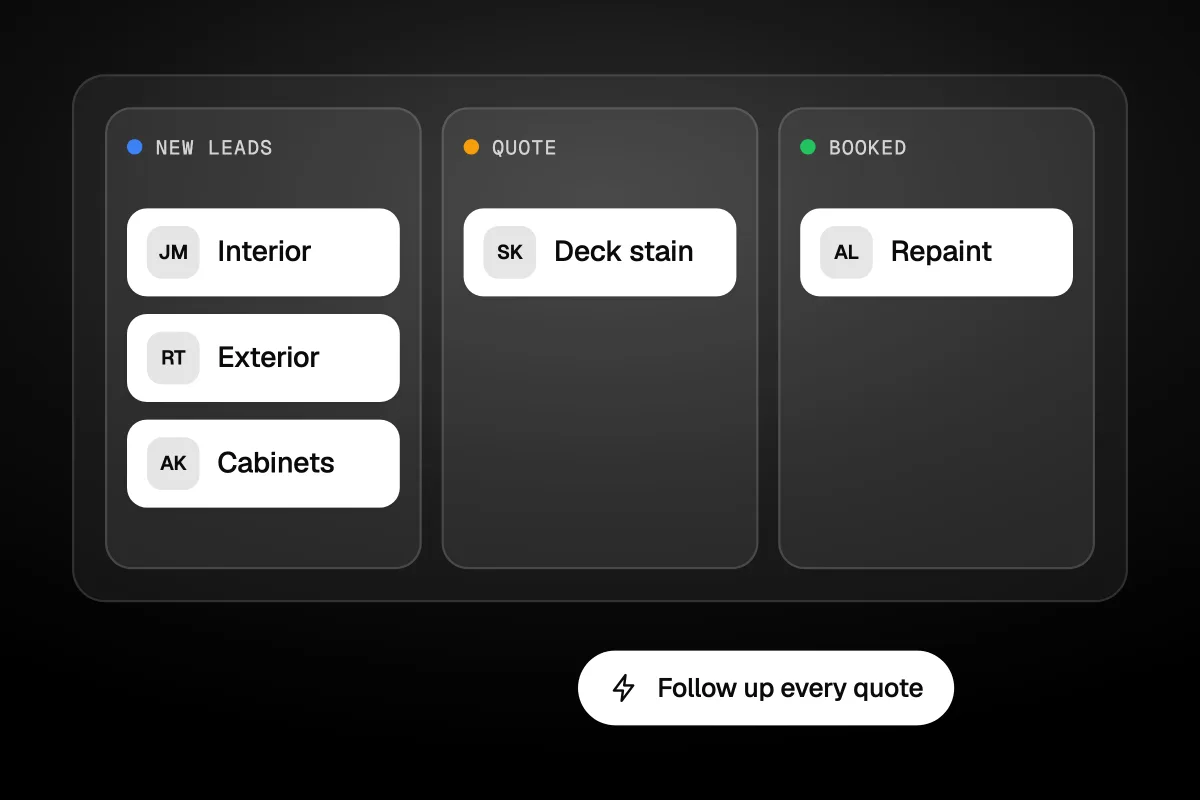
The fastest way to get painting leads is to answer every enquiry quickly, win on Google with a clean profile and fresh reviews, and run a site with a page per service and town, then add paid ads and buy leads last. That order matters more than any single trick. The cheap, owned sources feed the paid ones, and skipping them is how most painting marketing money gets wasted. This guide walks the whole plan, top to bottom.
The short answer
Reply to every call, text and form in minutes. Fix your Google Business Profile and ask for a review after each job. Build pages for Interior, Exterior, Cabinets and more, in each town you cover. Ask past customers and the neighbours of jobs. Then run search ads. Buy third-party leads only to fill slow weeks. Judge every source on cost per booked job, not cost per lead.
What is the right order to get painting leads?
The right order runs from cheap and owned to costly and rented. Owned sources cost you time, and they keep paying after you stop touching them. Rented sources cost money every month and stop the day you stop paying. Get the order wrong and you pour money into ads that land on a weak site, or buy leads for a phone nobody answers.
Here is the order that works for most painting businesses:
- Answer leads fast, and catch the ones you miss.
- Set up and clean your Google Business Profile.
- Ask every customer for a review, the same day.
- Build a site with before and after photos and a page per service and town.
- Work referrals and the neighbours of every job.
- Run search ads once the steps above are solid.
- Buy leads from third-party sites, last, to fill gaps.
Each step makes the next one pay better. A strong profile makes your ads cheaper. A page about "Exterior house painting in [town]" turns an ad click into a booking. Skipping steps is the single most common way painting leads cost more than they should.
Build the cheap, owned sources first. Rent leads only to fill the gaps they leave.
Why does answering leads fast come first?
Because the enquiry you already have is cheaper than any new one. A homeowner who wants a quote for a repaint calls two or three painters and books the first one who picks up and sounds organised. If your phone rings out while you are up a ladder, you paid for that lead with your time or your ad spend, and you handed it to the next painter on the list.
Start by measuring the leak. For 30 days, log every call, form and text: where it came from, whether you booked it, and what the job was worth. Ask each new caller how they found you. Most painters are surprised how many enquiries ring out mid-job or over a weekend.
Then plug it. Set the office line to ring more than one phone. Decide who covers evenings. Send an automatic text to every missed call so the caller holds for you instead of dialling the next name. We cover the exact wording in our guide to missed call text back. The same habits that help a painter help every trade, which is why we wrote a parallel plan on how to get more plumbing leads.
How do painters win on Google Business Profile and reviews?
Your Google Business Profile is the free listing that puts you on the map when someone searches "painter near me". It is the highest-value thing most painters can fix this week, and you cannot buy your way up it. Google says plainly that "There's no way to request or pay for a better local ranking on Google" (Google Business Profile Help).
Google says local ranking comes down mainly to relevance, distance and how well known your business is, which includes reviews. You cannot move your base, so work on the parts you control.
- Set up as a service-area business. If you drive to customers, Google's rules say to list one profile for your central location with a service area, and to hide your address (Google guidelines for representing your business).
- Use your real business name. Stuffing it with "cheap house painter" breaks the rules and can get you suspended.
- Pick the fewest categories that fit. Painter as the main one, then only real extras.
- List your services by name. Interior painting, Exterior painting, Cabinets, fence and Deck stain, wallpaper removal.
- Add real photos. Your crew, your van, and clear before and after shots of finished work. Not stock images.
Then reviews. Ask every customer the same day the job wraps, while they are still standing in a fresh room and loving it. A short link texted from the van gets far more reviews than a card left on the bench. Reply to each one. A steady drip of recent reviews beats a pile of old ones, and reviews that name the service and the town help you show up for that search.
The map runs on your profile and your reviews. Both are free, and both are earned one job at a time.
What should a painting website have?
A painting website needs before and after photos and one clear page for each service and town, not a single page that lists everything. Search engines rank a page about "Cabinet painting in [town]" above a homepage that mentions cabinets in one line. And a homeowner trusts a page that is about the exact job they want done.
Think in a grid. Down one side, your services: Interior painting, Exterior painting, Cabinets, Deck stain, fence staining, feature walls, new-build and repaints. Across the top, your towns. Each box is a page. You do not need them all at once. Build the ones for the work you want more of first.
Every page needs the same bones. A short, plain headline that names the service and town. Three or four before and after photos of real jobs. A line on what is included, how you protect floors and furniture, and roughly how long it takes. The reviews that mention that job. And one clear way to get a quote on every screen, phone size included. Photos do more work here than words. A wall of clean, well-lit before and after shots sells painting better than any paragraph.
Link the pages to each other. An Interior page should link to Cabinets and feature walls. A homeowner booking one room often books the next. The real win is treating the site, the profile and the follow-up as one system rather than three separate jobs.
How do painters get leads from referrals and neighbours?
Referrals and the neighbours of your jobs are the cheapest painting leads there are, and most painters never ask for them on purpose. A repaint is loud and visible. The street sees your van for a week and the fresh colour for years. That is free attention, if you use it.
Build two habits. First, ask for the referral at the right moment, which is the day you finish, not three months later. Say it plainly: "If a friend needs a painter, send them my way." Hand over two cards. Second, work the street. Before you pack up, drop a simple card in the ten closest letterboxes: "We just repainted number 14. Free quote if you are thinking about yours." People trust a painter their neighbour already used.
Keep a list of every past customer with the date and the job. A home gets repainted every several years, and exteriors weather faster than interiors. A short message at the right time ("it has been a few years since we did your exterior, want us to take a look?") turns an old job into a new one. That is the same idea as database reactivation, done for a painting book.
A finished job is a billboard on a street full of homeowners. Ask, and drop a card next door, every single time.
When should a painter run paid ads?
Run paid ads only after the first steps are in place. Ads send strangers to your business, and the profile, the site and the fast reply decide whether those strangers book. Pay for clicks before that, and you are filling a bucket with a hole in it.
When you are ready, start with search ads: Google ads that show when someone types "exterior painter [town]" or "cabinet painting near me". These catch people who already want the job now, which is why they tend to book better than ads shown to people who were not looking. Point each ad at the matching service-and-town page, not your homepage. Someone who searched for Deck stain should land on the Deck stain page.
Set a monthly cap you can lose without pain. Track the number that matters: not clicks, not leads, but booked jobs and what they were worth. If a campaign brings in jobs for less than they pay you, do more of it. If it does not, change the page or the ad before you spend more. Social ads can work for painting because the before and after photos are so strong, but search is where ready buyers are, so start there.
Should painters buy leads from third-party sites?
Buy leads from third-party sites last, and only to fill slow weeks. Sites like Angi, Thumbtack and local directories sell you an enquiry, often the same enquiry they sold to three other painters. You are then racing those painters on price and speed. That can work, but it is rented, and you own nothing at the end.
Judge a bought lead the way you judge any source: cost per booked job, not cost per lead. A pile of cheap leads that never book is more expensive than a few that do. Reply in minutes, because on these sites the first painter to call usually wins. Read our Angi Leads review before you sign up to anything, so you know what you are buying and how the billing works.
The trap is leaning on bought leads instead of fixing the owned sources. Bought leads stop the day you stop paying. Your Google profile, your reviews and your site keep working. Use bought leads to smooth out a quiet month, then put the profit back into the sources you own.
How many painters compete for these leads?
Painting is a large, steady trade, which means real competition for every lead. The US Bureau of Labor Statistics counts 326,900 painters in construction and maintenance in 2025, with employment projected to grow about 3 percent through 2035 and roughly 24,900 openings a year on average (U.S. Bureau of Labor Statistics).
A big, stable field tells you two things. Homeowners always need painters, so the demand is there. And plenty of painters are chasing it, so the ones who answer fast, look good on Google and have a clear site win the jobs. The method in this guide is how you stand out in a crowded trade without dropping your price.
FAQ
What is the single best way to get painting leads?
There is no single best way, but if you only did one thing, fix your Google Business Profile and get reviews after every job. It is free, it puts you on the map for "painter near me", and Google confirms you cannot pay to rank higher, so the work itself is the lever.
How fast should I reply to a painting enquiry?
In minutes, not hours. Homeowners call two or three painters and book the first one who picks up and sounds sorted. A missed call with no quick text back is usually a lost job, because the caller simply dials the next painter on their list.
Do before and after photos really help get leads?
Yes. Painting is visual, so a wall of clean before and after shots sells the work better than any paragraph. Put them on every service page, in your Google profile, and on social ads. They are the strongest proof you have that your Interior and Exterior jobs come out well.
Are paid ads worth it for painters?
They can be, but only after your profile, reviews and site are solid. Ads send strangers to your business, and those three decide whether strangers book. Start with search ads aimed at ready buyers, point each ad at the matching service page, and judge it on booked jobs, not clicks.
Should I buy leads from Angi or Thumbtack?
Only to fill slow weeks, and only after you measure cost per booked job. These sites sell the same enquiry to several painters, so you race on speed and price. They can smooth out a quiet month, but they are rented, so never rely on them instead of the sources you own.
How do I get repeat painting work?
Keep a list of every past customer with the date and job, then reach out when the work is due to weather, especially exteriors and Deck stain. A short, friendly message years after a job often books the next one, for far less than finding a brand new customer.
Why are my painting ads not working?
Usually because the clicks land on a weak homepage, the phone rings out, or the ad points at people who were not searching for a painter. Fix the fast reply and build service-and-town pages first, then point each ad at the page that matches what the person typed.
Getting more painting leads is not one big campaign. It is a short list of jobs done in the right order: answer fast, win on Google, build a site that shows your work, earn referrals, then pay for ads and buy leads last. If running all of that on top of actually painting sounds like a lot, that is the gap Havstock Unlimited fills. We set up and run the whole system as one, on a flat monthly subscription, so you keep painting while the leads keep coming.
Running ads? Check the maths first with our free ROAS calculator.