 Nathan Field
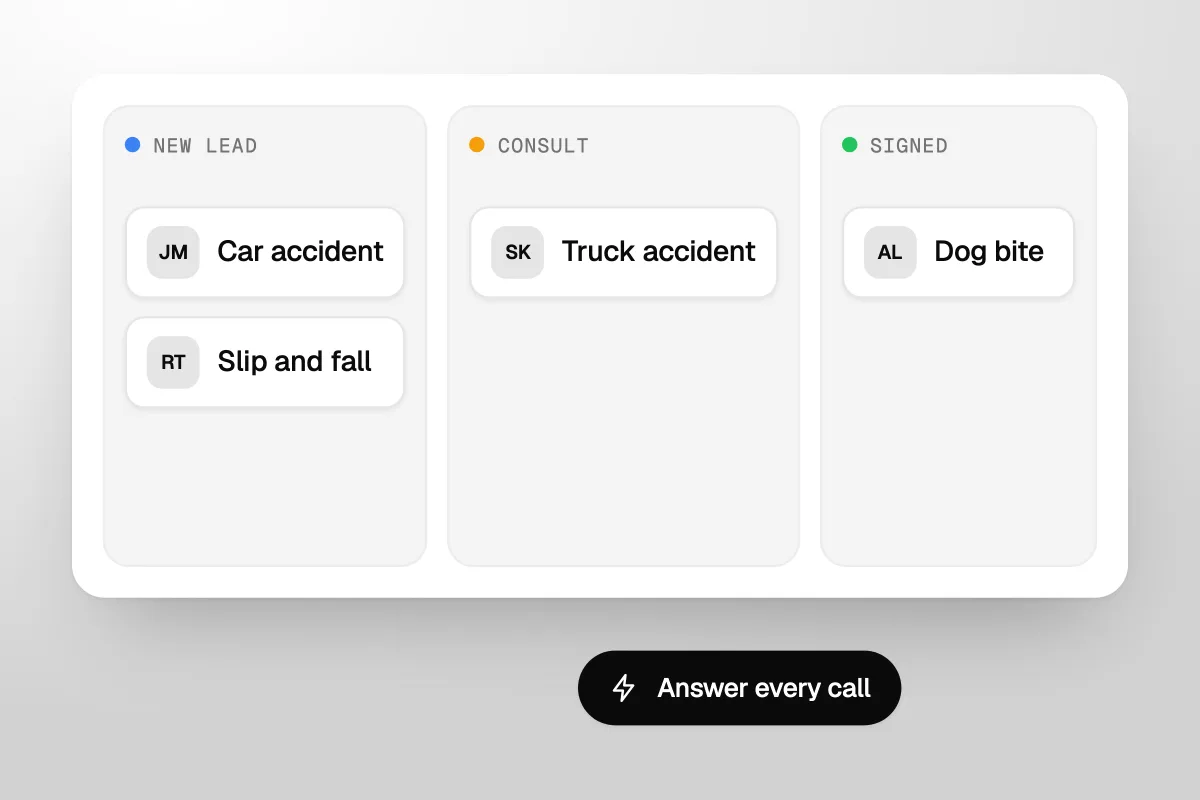
Personal injury lawyer marketing works best when you put your money where injured people already search, then answer every call within minutes. Judge each channel by what it costs to sign a case, not by clicks or views. This guide helps you decide where the money goes first, and which rules every injury ad has to pass.
We read the ABA's Model Rules, Google's own help pages and one state bar's ad rules on 18 October 2026. We are a marketing team, not lawyers, and this is not legal advice. We do not run marketing for a law firm today, so this is our view and our method. Check your own state bar's rules before any ad runs.
The short answer
- Fix intake first. Answer every call, day and night.
- Sort out your Google Business Profile and reviews. It is free.
- Test Google Local Services Ads. You pay per lead.
- Run search ads on your best case types.
- Start SEO now. It is slow, but you keep it.
- Build referrals inside the rules. Never pay anyone per case.
- Add TV or billboards last, and only if you can track them.
Why injury clicks cost so much
Injury firms pay some of the highest click prices in search. Here are Ubersuggest's US numbers, checked 18 October 2026. They are tool estimates, not prices Google publishes.
| Search | Searches a month | Average cost per click |
|---|---|---|
| personal injury lawyer | 201,000 | $163.25 |
| car accident lawyer | 201,000 | $228.18 |
The reason is how injury firms get paid. Injury cases are often taken on a contingent fee, paid out of what the client recovers. One signed case can pay for many clicks, so firms bid high. And most people hire an injury lawyer once, so there is no repeat customer to win back.
There is a catch. You pay Google this week, but your fee comes when the case settles or wins, maybe many months later.
At $163 a click, every missed call is money you already spent.
Personal injury law firm marketing: where the money goes
Here is how the main channels compare. The speed column is our view, not a measured number.
| Channel | How you pay | How fast calls come (our view) | Still works when you stop paying? |
|---|---|---|---|
| Google Business Profile and reviews | Free. Costs your time | Weeks to months | Yes |
| Google Local Services Ads | Per lead, to Google | Fast, once Google's checks are done | No |
| Google search ads | Per click, to Google | Days | No |
| SEO pages on your site | Your time, or a web team | Months | Yes |
| Referrals from other lawyers | Fee splits, under your state's rules | Depends on your network | Yes |
| Bought leads | Per lead, to the seller | Days | No |
| TV, radio and billboards | Airtime or space, plus making the ad | Slow. People have to remember you | No |
Our view: start where people already look. Someone hurt in a crash picks up their phone and searches. Search ads, Local Services Ads and your Google profile meet them right then. TV only pays if people still remember your name months later. So fill the search channels first, build SEO under them, and add TV later if the budget allows.
The ethics rules every injury ad has to pass
The ABA's Model Rules are a template. Each state adopts its own version, and many add more.
No false or misleading claims
Model Rule 7.1 says a lawyer "shall not make a false or misleading communication about the lawyer or the lawyer's services." True words can break it too. The ABA's comment says "misleading truthful statements are prohibited by this Rule" (ABA, Comment on Rule 7.1).
Take a line injury ads love: "No fee unless we win." Ask your bar whether it could mislead if clients still owe case costs after a loss. Rule 1.5(c) says a contingent fee deal must be in writing, signed by the client. It must also tell the client about any costs they owe "whether or not the client is the prevailing party."
Case results and big numbers
The same ABA comment says a true report of past wins "may be misleading" if it leads people to an "unjustified expectation" of the same result. It adds that a fitting disclaimer may help. Some states have their own rules on past results, so check yours before a settlement figure goes on a billboard.
Can you call yourself a specialist?
Only in a narrow way. Rule 7.2(c) says a lawyer must not "state or imply" they are a certified specialist, unless an approved body certified them and the ad names that body. The comment says saying you "specialize" based on experience is generally allowed, if it is not misleading.
Your name on every ad
Rule 7.2(d) says every ad "must include the name and contact information of at least one lawyer or law firm responsible for its content."
Solicitation: no live calls to crash victims
Rule 7.3(b) bans seeking work by "live person-to-person contact" for money, with a few exceptions such as other lawyers, family and past clients. The ABA's comment says live contact means in person or a live phone call. It does not include text messages or other written messages people can easily ignore. Rule 7.3(c) still bans any solicitation once the person has said no, or if it involves "coercion, duress or harassment".
Ads are different. The comment says a message to the general public, "such as through a billboard, an Internet banner advertisement, a website or a television commercial", is not solicitation. The rules also cover people you hire. The comment on Rule 7.2 points to the duty not to break the rules "through the acts of another".
State rules go further: one example
Under Texas Rule 7.04(a), a lawyer files each ad with the State Bar's Advertising Review Committee no later than "ten (10) days" after it goes out, unless it is exempt. The State Bar's Advertising Review page says the fee is $100, and you can ask for pre-approval at least 30 days before an ad runs. Texas Rule 7.03(d)(2) also wants solicitation messages to new clients marked "ADVERTISEMENT", with a few exceptions. We read both rules on the Texas Center for Legal Ethics site, 18 October 2026.
The model rules are a starting point. Your state's rules are the ones that apply to you.
Referral fees and buying cases
This is where injury marketing gets firms in trouble. Model Rule 7.2(b) says a lawyer "shall not compensate, give or promise anything of value to a person for recommending the lawyer's services". It lists five exceptions:
- The reasonable cost of ads.
- The usual charges of a legal service plan, or a not-for-profit or qualified lawyer referral service.
- Buying a law practice.
- A referral swap that is not exclusive, where the client is told about it.
- Small thank-you gifts that are not really payment.
Can you pay a chiropractor or tow truck driver for referrals?
Not under the model rules. Paying per case is paying for a recommendation. A two-way referral deal with a doctor or chiropractor can be allowed, but the ABA's comment says you "must not pay anything solely for the referral". A thank-you gift has to stay a token, and it is banned if it was promised in return for more referrals.
Can you pay another lawyer a referral fee?
Often, with conditions. Rule 1.5(e) lets lawyers in different firms split a fee only if the split matches the work each does, or each takes joint responsibility for the case. The client must agree in writing, including each lawyer's share, and the total fee must be reasonable. Check your state's version before you agree to a split.
What about lead sellers and agencies?
The ABA's comment allows paying for leads if the seller does not recommend you. Our guide to law firm lead generation lists the questions to ask a seller. Rule 5.4(a) says a lawyer "shall not share legal fees with a nonlawyer", with narrow exceptions. If any deal ties a vendor's pay to your fees, ask your bar first. Paying a set price for the work avoids the question.
Google Local Services Ads for injury lawyers
Local Services Ads are the listings at the very top of some Google searches, with a call button. Google says you "only pay when a customer gets in touch from your ad". Here is what Google's US list shows for the personal injury lawyer category (Google, Business screening and verification requirements, checked 18 October 2026):
| Check | What Google lists for a personal injury lawyer |
|---|---|
| Licence | State bar license checks for each personal injury lawyer in the firm |
| Identity | Business owner identity verification |
| Insurance | Professional liability insurance, where local law needs it |
| Business check | Select users only |
You may have read about the "Google Screened" badge for lawyers. Google's badge page now talks about "a single badge for all advertisers", called Google Verified, and does not mention Google Screened. Our guide to Google Guaranteed and Google Verified explains the change.
The badge does not decide who shows first. Google's ad rankings page says your bid counts, and so does "your responsiveness to customer inquiries and requests". Profile quality counts too: "Your rating, number of reviews, average response time". Google adds that higher-quality profiles "may also pay lower costs per lead". Fast replies and good reviews can mean a higher rank at a lower price.
SEO for personal injury lawyers
SEO is the slow part you get to keep. With ads for "personal injury lawyer" at about $163 a click, every visit from the free results is one you did not have to buy.
For the map results, Google's help page says "local results are mainly based on relevance, distance, and popularity," and "more reviews and positive ratings can help your business's local ranking." For your website, Google's SEO Starter Guide says "there are no secrets here that'll automatically rank your site first in Google." Some changes take hours, it says, and "others could take several months."
What pages does an injury firm's website need?
- One page per case type you take. Car accidents, truck accidents, slip and fall, dog bites.
- One page per city or office. Say which towns and courts you cover.
- A page on how your fee works. Include what clients owe if the case is lost.
- A page on the first consult. What to bring, and what happens next.
Put a phone number people can tap at the top of every page, with a short form under it. AI tools like ChatGPT read these pages too. Here is how to get recommended by ChatGPT.
How do you get more reviews without breaking the rules?
Ask every client when their case closes, not just the happy ones. Google's content policy bans "reviews or ratings that have been paid for, directly or in kind." It also says businesses must not "selectively solicit positive reviews from customers." So no gift cards, and no asking only the clients who won big.
Reply with care, because a lawyer's reply can give away private case details. Our guide on how to respond to negative reviews covers what not to say. Before you quote a review in an ad, check your state's rule on testimonials.
Good reviews bring more calls, but only if someone answers them.
Intake: the cheapest fix in personal injury marketing
You pay for the click whether anyone answers or not. On Local Services Ads, a slow reply also costs you rank. If nobody picks up, the caller can tap the next ad on the same screen.
- Answer every call, day and night. Crashes do not happen in office hours. Our guide to a law firm answering service covers costs and what to ask.
- Text back every missed call within a minute.
- Ask the same intake questions every time, and run your conflict check before the consult. Our legal intake guide walks through each step.
- Write the source on every new enquiry. Give each channel its own tracking phone number.
- Follow up with everyone who had a consult and did not sign. A few messages over two weeks, then stop.
Cost per signed case: a worked example
This is the number that tells you where to spend. Take what you spent on one channel in a month, including any agency fee. Divide it by the cases that channel signed.
The table uses example numbers, not results and not benchmarks. Only the click price is a real input: Ubersuggest's $163.25 average.
| Channel (example numbers) | Spend | Leads | Signed cases | Cost per signed case |
|---|---|---|---|---|
| Search ads (about 61 clicks at $163.25) | $10,000 | 8 | 2 | $5,000 |
| Local Services Ads | $4,000 | 20 | 3 | $1,333 |
| Bought leads | $6,000 | 40 | 2 | $3,000 |
| TV, tracked with its own number | $25,000 | 30 | 5 | $5,000 |
Here, bought leads look cheap per lead but not per case. TV and search cost the same per case, but TV needs far more cash up front. Your numbers will differ. That is why you do the sum.
Then check what a case is worth. Your average fee on that case type, after case costs, is your ceiling. A channel that signs fewer but bigger cases can still win. Our guide to law firm KPIs puts this on one page with your other numbers.
TV and billboards vs digital
TV and billboards are allowed. The ABA's comment on Rule 7.2 lists "television and radio airtime" among the ad costs a lawyer may pay, and Rule 7.3's comment says a billboard or TV commercial is not solicitation.
| TV and billboards | Search, Local Services Ads and SEO | |
|---|---|---|
| Who it reaches | People who may need a lawyer one day | People looking for a lawyer right now |
| How you track it | A phone number and web address used only on that ad, plus "How did you hear about us?" at intake | Every click and call can be traced to the ad or page |
Our view: TV can work for a firm with the cash to stay on air for a long time. For most firms, it is the wrong first move. You cannot see what it is doing for months, and the money is spent either way. If you do run TV, give it its own phone number from day one.
Where Havstock fits, and who should not hire us
Havstock has no law firm client today, so we offer our method, not a case study. For an injury firm, we would follow the order in this guide: intake follow-up and tracking first, then the Google profile, Local Services Ads, search ads and SEO pages. Our ads service covers the ad side, and a lawyer at your firm would approve every ad before it runs.
It is a marketing subscription: one flat fee of $4,995 USD a month, month to month, no contract. You pay ad spend to Google directly, and you own every account, page and contact. You can see how Havstock Unlimited works, or read what we do for law firms.
This will not suit you if:
- You want TV, radio or billboards. We do not do filming, video editing or print.
- You are a solo lawyer and referrals already fill your week. Keep your money.
- Nobody will answer the phone. More ads will only buy more missed calls.
- You want someone to buy cases or set up per-case referral deals. We will not.
- You want a legal opinion on your ads. We write them. Your lawyer checks them.
FAQ
How much do personal injury lawyers spend on advertising?
We could not find a trustworthy public number. The "15 to 20% of revenue" line on vendor blogs had no study behind it on the pages we checked on 18 October 2026. Set your budget from your own numbers instead. Work out your cost per signed case for each channel, then spend more where it is lowest.
Why do personal injury lawyers advertise so much?
Because one signed case can be worth a lot, and most clients only need an injury lawyer once. Firms cannot rely on repeat customers, so they keep paying to reach new ones. That competition pushes prices up. Ubersuggest estimates the average click on "personal injury lawyer" at $163.25 in the US.
Can lawyers pay for referrals?
Mostly no. ABA Model Rule 7.2(b) bans paying anyone for recommending you, with five exceptions. These include ad costs, a qualified lawyer referral service, a non-exclusive referral swap the client is told about, and token gifts. Fee splits with other lawyers follow Rule 1.5(e). Your state's version of these rules is the one that counts.
Do Google Local Services Ads work for personal injury lawyers?
They can. You pay per lead, and Google checks each lawyer's state bar license before your ads run. Google ranks these ads partly on how fast you respond and on your reviews, so firms with strong intake tend to do better. Track cost per signed case for the first few months before you raise the budget.
Is TV advertising worth it for a personal injury firm?
It can be, for a firm with the cash to stay on air for a long time. It reaches people before they need a lawyer, so it is slow to pay back and hard to track. If you try it, give each ad its own phone number and ask every caller where they heard about you.
How long does SEO take for a personal injury law firm?
Months, not weeks. Google's own SEO Starter Guide says some changes show within hours, while others "could take several months." With clicks near $163, injury searches are crowded, so expect the slow end. Start pages now while paid ads bring calls, and keep adding a page each month.
Personal injury lawyer marketing comes down to a simple order. Answer every call first, then show up where injured people search, and build the pages and reviews you get to keep. Stay inside your state bar's rules on ads, referrals and past results. Let cost per signed case tell you where the next dollar goes.