 Nathan Field
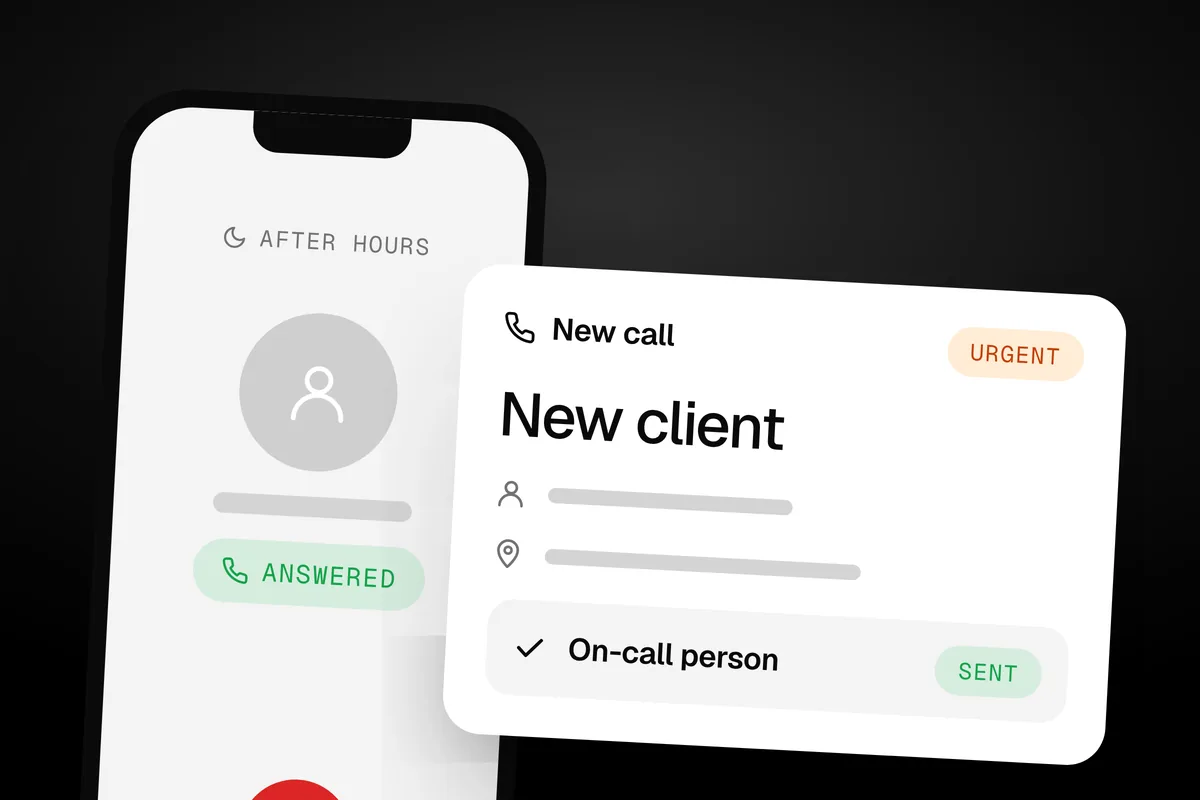
An answering service for a small business picks up your calls when you can't, takes the caller's details, and passes the message or the call on to you. You can pay for human receptionists, an AI receptionist, or a mix of both. On the pricing pages we checked on 22 November 2026, live human answering started at $49 a month plus a per-minute rate, bundled human plans ran from $250 to $1,725 a month, and one AI receptionist had a free plan for 25 calls a month. The right pick depends on how many calls you get, when they come, and what a missed one costs you.
The short answer
Pick a human answering service if your calls are complex, emotional or high value and you want a person on every one. Pick an AI receptionist if you get lots of simple calls, like bookings, hours and prices, and want 24/7 cover for less. Pick a hybrid if you want AI to take the routine calls and a person for the rest. Before you pay for any of them, check how many calls you really miss. Your phone bill or call log will tell you.
What does an answering service for a small business do?
An answering service answers your business number in your company's name when you are busy, closed or on another call. A good one does more than take a message. Depending on the plan, it can:
- Answer with your business name and a greeting you write
- Ask the questions you choose, like the job, the address and how urgent it is
- Book appointments straight into your calendar
- Transfer hot leads or emergencies to you or your on-call person
- Text or email you a summary of every call
- Answer common questions from a script, like hours and service area
The job it does for your business is simple. Every caller gets a real answer, so they don't hang up and call the next business on the list.
How much does an answering service cost for a small business?
A small business answering service costs anywhere from $0 to over $2,000 a month, depending on whether it is human or AI and how many calls or minutes you buy. These are the prices on each provider's own page, checked 22 November 2026.
| Provider and plan | Type | Price on its page | What you get |
|---|---|---|---|
| PATLive pay as you go | Human | $49 a month | No included minutes, $2.99 per additional minute |
| PATLive 50 minutes | Human | $99 a month | 50 minutes (PATLive says about 20 calls), $2.29 per additional minute |
| Ruby 50 minutes | Human | $250 a month | 50 receptionist minutes |
| Ruby 200 minutes | Human | $720 a month | 200 receptionist minutes. Ruby marks it "most popular" |
| Ruby 500 minutes | Human | $1,725 a month | 500 receptionist minutes |
| Smith.ai Starter | Human | $300 a month | 30 calls, $11.50 per call over 30 |
| Smith.ai Basic | Human | $810 a month | 90 calls, $10.50 per call over 90 |
| Smith.ai AI Receptionist Free | AI | $0 | 25 calls a month |
| Smith.ai AI Receptionist Pro | AI | Listed at $2.00 a call | 75 calls a month, dedicated onboarding, live support |
Sources: PATLive pricing, Ruby pricing and Smith.ai pricing. Ruby also sells chat bundles for your website on top of calls.
Watch how each one counts. Ruby and PATLive sell minutes. Smith.ai sells calls. A business with short calls gets more from a per-call plan's count. A business with long calls, where each one takes five minutes of questions, burns through minutes fast. Look at your average call length before you compare.
Every caller gets a real answer, so they don't hang up and call the next business on the list.
What extra fees do answering services charge?
The headline price is rarely the whole bill. Read the add-ons before you sign. Smith.ai's human plans, for example, list paid extras per call on its pricing page:
- Booking appointments: $1.50 a call
- Text and email follow-up: $0.50
- Call recording and transcription: $0.25
- A dedicated Spanish line: $1.00
- Taking payments: $1.00
- Extra CRM connections: $0.50 a call per additional CRM
Ruby takes the other approach. Its pricing page says there are "no additional or hidden fees for activation, onboarding, setup, customization, or coverage", and that the only difference between plans is the number of minutes and chats.
Neither model is better. Per-call extras are cheaper if you only need the basics. Bundled pricing is easier to budget. Work out your real monthly cost using your own call count, not the plan name.
Should a small business use a human or AI answering service?
Use a human answering service when the call itself is the sale or the call is sensitive, and use AI when most calls are routine. Here is how we would split it.
| Your calls are mostly... | Best fit | Why |
|---|---|---|
| Bookings, hours, prices, "do you service my area?" | AI receptionist | Routine questions with set answers. AI handles them 24/7 for less |
| New clients with a complex problem, like a legal matter or a big renovation | Human | The first call sets trust. A person handles the back-and-forth better |
| Upset or emotional callers, like a burst pipe at 2am | Human, or AI with fast transfer | Calm matters more than speed |
| A mix, with high volume | Hybrid | AI takes the routine calls, a person takes the rest |
Smith.ai's pricing page now offers all three set-ups by name: "AI-first", "Hybrid" and "Human-first". That tells you where the market is going. Most providers expect you to mix.
The other test is your callers. Some customers hang up on any robot voice. Others just want the booking done. You know your customers better than any vendor does. If you are unsure, start with the free AI plan, listen to the recordings for two weeks, and see how callers react.
When does a small business need an answering service?
You need an answering service when missed calls are costing you jobs. These are the signs:
- You are on a job site, in a chair or with a client most of the day
- Your call log shows missed calls you never returned
- Calls come in after hours or on weekends, and those callers book with someone else
- You pay for ads, and the calls they bring go to voicemail
The last one is the costly one. If you pay for a lead and nobody answers, you paid for nothing. Our guide on speed to lead covers why the first business to answer usually wins.
You may not need one yet if you get only a handful of calls a week and you can return each one within the hour. A good voicemail greeting plus a missed call text back may be enough at that stage.
How do you choose an answering service?
Choose an answering service with a short trial, your own call data and these questions.
- How do you count usage? Minutes or calls, and what happens when I go over?
- What costs extra? Booking, transfers, recordings, bilingual answering, CRM connections.
- Can you book into my calendar and follow my rules for job types?
- How do you handle emergencies? Can you transfer to my on-call phone, and what happens if I don't pick up?
- Is there a contract? PATLive's pricing page, for example, says it has no contracts and you can change plans or cancel anytime.
- Do you cover after hours, weekends and holidays? Ruby's page lists 24/7 coverage, including holidays.
- Can I hear real calls? Recordings, or a test call you make yourself.
Then call the service yourself, as a customer, at 9pm on a Sunday. That one call tells you more than any sales page.
Are answering services different by industry?
Yes. The core service is the same, but the script, the urgent-call rules and the privacy needs change by trade. A dental office needs to sort a knocked-out tooth from a cleaning booking. A law firm needs conflict checks and careful intake. A plumber needs to know a burst pipe from a dripping tap.
We have written guides for the most common ones: dental answering services, law firm answering services, plumbing answering services and answering services for contractors. If you handle health data, check the provider's privacy terms. Ruby's page, for example, says HIPAA-compliant services are available.
What should you set up before the answering service goes live?
Set up five things before day one, or the service will take vague messages and you will still be calling people back to ask basic questions.
- A short greeting with your business name.
- The questions to ask, in order. Name, phone, address, what they need, how urgent.
- Your answers to common questions: hours, area, rough prices if you give them by phone.
- Your urgent-call rule: what counts as urgent, who gets the transfer, and the backup if they don't answer.
- Where the message goes: text, email, or straight into your CRM, so nothing sits in an inbox.
The last one matters most. An answered call that sits in an email folder until Tuesday is a missed call with extra steps.
FAQ
How much is an answering service per month for a small business?
On the pages we checked on 22 November 2026, live answering started at $49 a month plus $2.99 a minute with PATLive, bundled human plans ran from $250 to $1,725 a month with Ruby, and Smith.ai's human plans started at $300 for 30 calls. Smith.ai's AI receptionist had a free plan for 25 calls.
Is a virtual receptionist the same as an answering service?
Mostly, yes. "Virtual receptionist" usually means a remote person, or AI, who answers as if they work at your business, often with booking and transfers. "Answering service" can mean that or a simpler message-taking service. Compare what each plan actually does, not its name.
Can an AI answer my business calls?
Yes. AI receptionists answer calls, ask your questions, book appointments and send you summaries, often 24/7. Smith.ai, for example, lists a free AI plan for 25 calls a month. Our guide to AI receptionist costs compares more providers and prices.
Is a 24/7 answering service worth it for a small business?
It is worth it if after-hours callers are real customers who would otherwise book with a competitor, like emergency trades or medical offices. If almost nobody calls at night, pay for business hours and overflow only, and use a voicemail plus a text back for the rest.
Do answering services have contracts?
Some do, some don't. PATLive's pricing page says it has no contracts and you can cancel anytime. Smith.ai's AI page offers six-month plans at a lower rate. Always ask about notice periods and fees to leave before you sign.
Can an answering service book appointments?
Many can, often for an extra fee. Smith.ai lists appointment booking at $1.50 a call on its human plans. Check that the service can connect to your calendar, follow your rules for job length and travel time, and send you a note for each booking.
Picking an answering service for your small business
The best answering service for a small business is the one that fits your call count, your call length and your callers. Check your call log first. Then trial one human and one AI option for two weeks each, listen to the recordings, and keep the one that turns more calls into bookings.
An answering service catches the calls. Getting more of the right people to call, and following up with every one of them, is a marketing job. That is what we do at Havstock, including AI chat on your site and by text that answers questions and books appointments. We are not an answering service and we do not answer phone calls, so if calls are your only gap, one of the providers above is the right first step.